What to Put in a Monthly AEO Report for Agency Clients
The monthly AEO report structure agencies can send every client: which metrics to lead with, how to show zero-click visibility, and how to explain a down month.

On this page
- Start with the number the client actually cares about
- The seven sections of a monthly AEO report
- How to present zero-click visibility
- How to explain a down month without losing the client
- Setting first-90-day expectations inside the report
- Translating the report for a non-technical stakeholder
- Where this fits in the agency delivery model
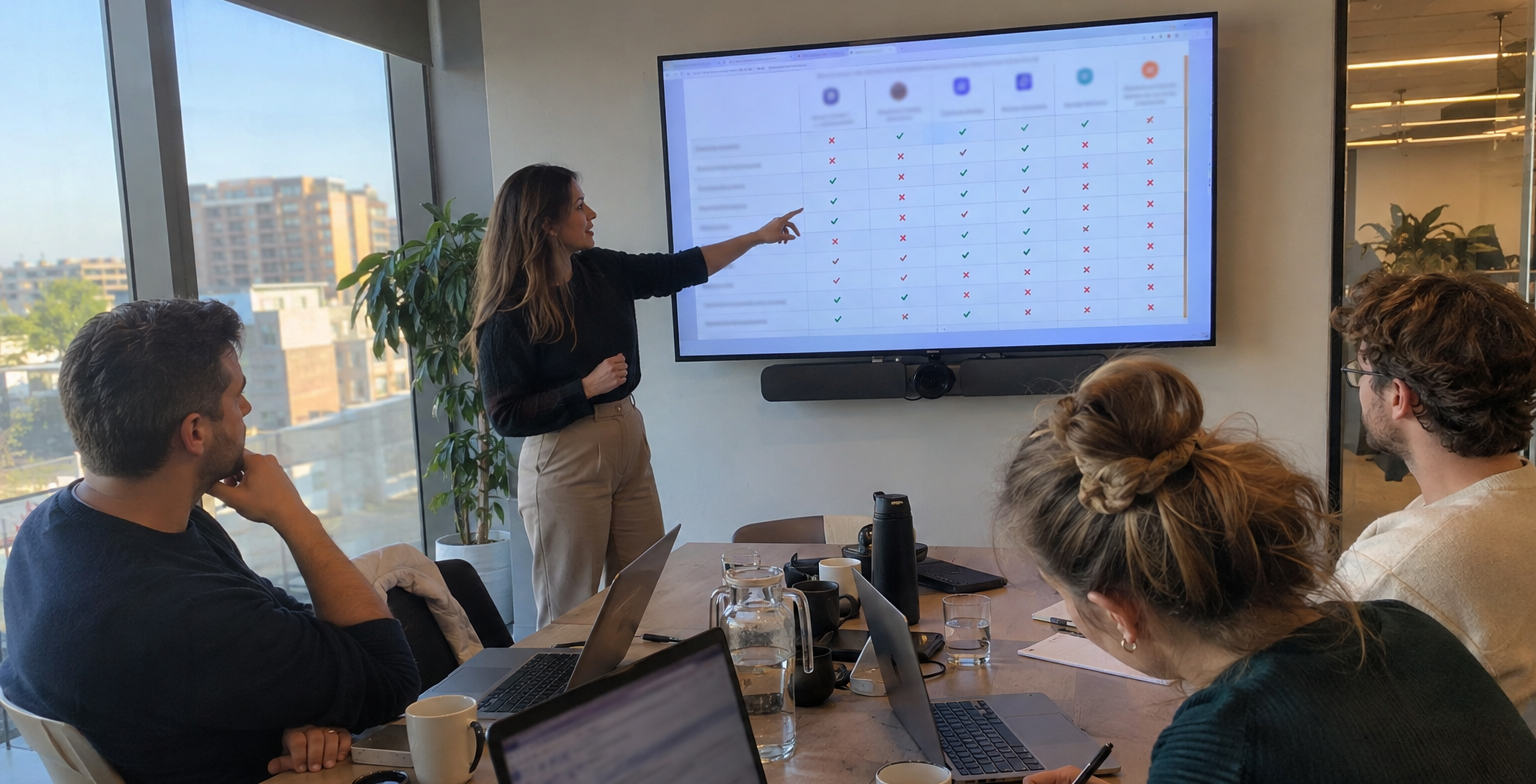
Most agencies selling answer engine optimization can win the pitch and deliver the work, then lose the account at the monthly report. The client opens a dashboard full of radar charts, does not see a number that connects to revenue, and starts asking why they are paying a retainer. The reporting is the retention. This guide gives you a monthly AEO report structure you can send every client: the sections in order, the metrics that belong at the top, and the three conversations that most templates skip entirely, namely how to present zero-click visibility, how to explain a down month, and how to set expectations in the first 90 days. The report is the final layer of the AEO tech stack a digital agency needs, with measurement, research, production, ingestion, and corroboration beneath it.
If you are still building the service itself, our guide on how digital agencies can add AEO as a new service line covers packaging and scope. This piece assumes the work is running and focuses only on what you put in front of the client each month.
Start with the number the client actually cares about
Open every report with citation share versus named competitors, not with your total mention count. A client does not know whether 42 mentions is good. They immediately understand "you are cited in 28 percent of the answers for your top 15 buying questions, up from 19 percent, and your closest competitor sits at 34 percent." That single line frames the entire report as a competitive race the client can follow.
Put it in the first screen, above everything else, with three data points: your citation share this month, the change versus last month, and the leader you are chasing. Everything after that is the explanation of how the number moved. If you need to build a defensible citation baseline before you can report share, our guide on how to measure your brand's AI citation share across LLMs covers the query-set construction that makes the percentage meaningful rather than arbitrary.
The seven sections of a monthly AEO report
A report that a busy client will actually read has a fixed order, moving from the headline down to the operational detail. Keep the whole thing to a scannable structure so the executive reads the top and the practitioner reads the rest.
| Section | What it answers | Lead metric |
|---|---|---|
| 1. Executive headline | Are we winning the category race? | Citation share vs top competitor |
| 2. Visibility by engine | Where are we strong and weak? | Citation rate per ChatGPT, Claude, Gemini, Perplexity |
| 3. Query movement | Which buying questions did we gain or lose? | Queries newly cited vs lost |
| 4. Cited pages | What content is doing the work? | Top cited URLs and gaps |
| 5. Zero-click visibility | Where are we quoted without a click? | Answer appearances with no session |
| 6. Influenced pipeline | Is this connected to revenue? | Self-reported AI leads and influenced opportunities |
| 7. Next month's plan | What are we doing about it? | Prioritized actions |
The order is deliberate. The client sees the race first, the diagnosis in the middle, and the plan last, so the report reads as a story rather than a data dump. Break visibility out by engine because each model reads a different index and scores sources by different rules, so a client can be strong in Perplexity and invisible in Gemini in the same month, and hiding that inside one blended number costs you credibility when the client checks manually. If you serve rival clients, break out their owned and shared questions too, the approach laid out in when portfolio brands compete for the same answer.
How to present zero-click visibility
This is the section almost every template omits, and it is where AEO reporting earns trust. A large share of AEO value is zero-click: the engine quotes the client's content and answers the user without sending a visit. Traffic-based reporting misses this entirely, which makes AEO look weaker than it is.
Report it as its own line rather than burying it. Show how many of the client's target queries returned an answer that cited or quoted them, even where no session followed. Pair it with a plain sentence: "Your content answered 41 of your 60 priority questions directly inside the AI response this month. Those buyers got your information without a click, which is why the citation share matters more than the referral traffic." Naming the mechanism up front stops the client from later dismissing the work because "the traffic did not move." If you want to strengthen the input side so more of those answers pull from the client, structuring content as a machine-readable feed helps; the Content Engine shows how a structured feed makes a site more ingestible, and a free llms.txt generator gives crawlers a map of the priority pages to read.
How to explain a down month without losing the client
Citation share fluctuates. Engines re-index, competitors publish, models change how they weight sources. You will have months where the number falls, and the report is where you either keep the account or lose it. The rule: never present a decline as a bare number. Always attach the cause and the response.
A defensible down-month narrative has three parts. First, the specific movement: "citation share fell from 31 to 27 percent, driven by two queries where a competitor published a fresh comparison page." Second, the context that keeps it in proportion: "your absolute citation count held steady; the share dropped because the total answer volume for those queries grew." Third, the action already underway: "we are shipping updated answer content for those two queries this week." Clients tolerate a bad month when they see you diagnosed it faster than they could. They churn when the report hides it and they find out on their own. Similarweb's overview of how agencies deliver AI visibility services makes the same point: the reporting relationship, not the raw metric, is what sustains the retainer.
Setting first-90-day expectations inside the report
The fastest way to lose a new AEO client is to let them expect ranking-speed results. AEO moves on a different clock than a paid campaign. Bake a realistic timeline into the first three reports so the client is never surprised.
| Month | Realistic client expectation | What the report should show |
|---|---|---|
| Month 1 | Baseline established, first content shipped | Starting citation share, competitor gap, query set |
| Month 2 | Early citation movement on a few queries | First queries newly cited, indexing confirmed |
| Month 3 | Measurable share lift on priority queries | Share change vs baseline, first influenced leads |
Say the quiet part in the month-one report: "citation share for a new program typically shows meaningful movement by month three, not week two, because engines re-crawl and re-rank on their own schedule." A client who was told this in month one does not panic in month two. A client who was not told churns before the program has a chance to work. This is also where connecting AEO to pipeline early pays off; even a handful of self-reported AI leads in month three, captured on the client's forms, turns an abstract metric into revenue the client can feel. When that report travels up to the client's leadership, what executives expect from a monthly AEO report spells out which metrics belong on the cover slide.
Translating the report for a non-technical stakeholder
The person who approves the retainer is often not the person who understands citation share. Write the executive headline for them. Replace jargon with the business meaning: not "your GEO share of voice increased," but "when your buyers ask ChatGPT for a recommendation in your category, you now come up in roughly one in three answers, versus one in five last month." Keep the technical detail in the lower sections for the practitioner who wants it, and let the top of the report stand on its own for the approver who reads only that.
A useful test: could the client forward the first screen to their CFO with no explanation and have it make sense? If not, rewrite it until the metric carries its own business meaning. For a deeper reference on report construction, the AEO reporting guide for marketing agencies and the landscape overview from First Page Sage on GEO agencies both reinforce leading with competitive share over raw counts.
Where this fits in the agency delivery model
Reporting is the last mile of a delivery system that starts with measurement and content. If the underlying engine is producing citations, the report writes itself; if it is not, no chart layout will save the account. Our FastTrackr AI case study shows the full arc from citation gains to a reportable business result, and our guide on how to price and package an AEO retainer for agency clients connects the delivery work to the economics behind it.
Frequently asked questions
What metric should lead a monthly AEO client report?
Citation share versus a named competitor, shown as this month's figure, the change versus last month, and the leader you are chasing. It frames the report as a competitive race a non-technical client can follow, unlike a raw mention count they cannot judge.
How do I report AEO value when there is no referral traffic?
Report zero-click visibility as its own line: how many priority queries returned an answer that cited the client even with no session. Explain that buyers got the client's information inside the AI response, which is why citation share matters more than referral traffic.
How should an agency explain a month where citation share dropped?
Never present the decline as a bare number. Attach the specific cause (a competitor's new page, a re-index), the context that keeps it in proportion (absolute counts held, total volume grew), and the action already underway to recover it.
How fast should a client expect AEO results?
Set the expectation in month one: citation share for a new program usually shows meaningful movement by month three, not week two, because engines re-crawl and re-rank on their own schedule. Clients told this early do not panic in month two.
How often should agencies send AEO reports?
Send a concise automated visibility report monthly with the seven core sections, and reserve a deeper strategic review, with heatmaps and competitive stack rankings, for quarterly. Monthly keeps clients informed without consuming agency hours.