
Crisis AEO: Managing Negative Citations When AI Repeats a Bad Story
How to respond when ChatGPT, Claude, or Perplexity repeats a negative narrative about your brand, with a playbook for flooding the corpus with verifiable counter-content.

Key Highlights
- When AI keeps repeating a bad story about your brand, the question is not how to delete the citation. AI models do not have a takedown button. The question is how to flood the corpus with verifiable, more recent, higher-authority content that gives the model a better answer to retrieve.
- The first 72 hours of crisis AEO matter more than the next 72 days. Speed of counter-content publication, paired with placement on authoritative third-party sites, determines whether the negative narrative calcifies into model weights or fades to retrieval-only.
- The playbook has three layers: owned content (your site, blog, press room), earned content (PR, podcast appearances, third-party coverage), and structured signals (Wikidata, Wikipedia, schema updates). All three need to move in parallel.
- The companies that recover fastest treat crisis AEO as a 90-day program with weekly measurement, not as a one-time PR push followed by silence.
Why AI repeating a bad story is structurally different from a Google crisis
A traditional online reputation crisis follows a familiar shape. A negative article ranks for your brand name. You respond with PR, you publish counter-content, you push the negative result down the page, and over six to twelve months the SERP looks healthier. The mechanism is search ranking. The remedy is ranking the bad result lower.
AI citation crises do not follow that shape. When ChatGPT, Claude, or Perplexity recites a negative narrative about your brand, the question is not which result ranks first on Google. The question is which sources the model retrieved and which it summarized. A bad article that ranks fourth on Google can still be the source the AI grounds in, especially if it has high recency, high apparent authority, or strong topical match for the prompt. Even worse, if the negative narrative is broad enough to have entered training data rather than retrieval, the AI will repeat it even when no live source is fetched.
The structural challenge: AI models do not have an obvious takedown button. Some platforms offer feedback mechanisms. Some let you flag responses. Most do not. The path back to a clean brand narrative runs through the corpus the AI retrieves from, not through the platform itself. That is the work.
The diagnostic phase: what is the AI actually saying
Before you respond to an AI citation crisis, you need to know exactly what the models are saying, how often, and which sources they are citing. The temptation in a crisis is to skip the diagnostic and go straight to action. That usually wastes the first week on the wrong fix.
A proper diagnostic covers four questions. First, which models are repeating the negative narrative? ChatGPT might be quiet while Perplexity is loud, or vice versa. The fix differs. Second, which prompts trigger the negative response? Often it is only a narrow set of prompts (questions involving a specific year, a specific executive name, a specific incident keyword) rather than all brand-related prompts. Third, which sources is the AI citing as evidence? Sometimes the negative narrative traces to a single article on a single site; sometimes it is the aggregate of multiple sources. Fourth, what is the model actually summarizing? AI tools sometimes paraphrase a neutral article as negative or a single complaint as a pattern. Knowing the gap between source and summary is critical.
Most companies discover during the diagnostic that the narrative is narrower than feared. The negative response triggers on twenty out of two hundred prompts, not all two hundred. That changes the response plan from blanket crisis communications to targeted counter-content for the specific prompt set.
The 72-hour window: what to ship first
Crisis AEO has a sharper time profile than traditional reputation work. The first 72 hours matter disproportionately because AI providers crawl frequently, and content published in that window has a chance to enter the retrieval set before the negative narrative consolidates. Wait two weeks and the same content will work much harder to move the needle.
The 72-hour deliverables we ship for crisis clients always include a clear, factual statement on the company's own site at a discoverable URL, a structured FAQ addressing the specific questions the AI is fielding, an updated press-room page with the company's current position, and an updated organization schema record. None of this is glamorous. All of it is necessary.
| Window | Action | Why it matters |
|---|---|---|
| 0-24 hours | Diagnostic complete, war room formed | Cannot respond to what you have not measured |
| 24-72 hours | Owned-site counter-content live | First retrieval pickup happens here |
| 72 hours-2 weeks | PR placements and third-party coverage | Authority signals enter the corpus |
| 2 weeks-90 days | Structured signals, Wikidata, sustained content | Long-term narrative correction |
The three-layer response plan
Owned content is the foundation. Your site is the one place you control completely. The crisis-response page on your site should answer, in plain language and at length, every question an AI might field about the incident. Treat it as a deposition. Be factual, be specific, be timestamped. Mark it up with FAQ schema. Link it from your homepage and your press room. The goal is to give any AI grounding on the topic a high-confidence source to retrieve.
Earned content carries the authority signals AI models weight heavily. A statement on your own site is helpful. The same facts repeated by a reputable trade publication, an industry analyst, or a respected podcast host are more persuasive to the models. Crisis PR work in the AEO era is less about killing the bad story and more about flooding the corpus with the correct story from credible voices. Pitch journalists who cover your sector. Offer your executives for podcast appearances on the topic. Provide analysts with updated data.
Structured signals are the layer most crisis communications teams miss. Wikipedia, Wikidata, Crunchbase, and your own structured data are part of how AI models build their understanding of who you are. If your Wikipedia article is stale or your Wikidata entry is missing recent corrections, the AI is grounding in an outdated picture of your brand. Updating these requires patience (Wikipedia editors enforce strict notability and neutrality rules) but the payoff is significant.
What not to do in an AEO crisis
The biggest mistakes we see are predictable. The first is fighting the platform instead of the corpus. Sending angry emails to OpenAI or Anthropic does not change AI citations. The platforms are not curating responses about your brand specifically. The model is retrieving from the web. Change the web, change the response.
The second mistake is publishing thin, defensive content. A short, anodyne statement that does not actually answer the questions the AI is fielding will not be retrieved. Long, factual, structured content gets retrieved. Brief denials do not.
The third mistake is going silent after the initial press push. A two-week burst of activity followed by three months of nothing tells the model that the most recent authoritative content on the topic is the bad story, because the bad story is still being re-cited by other sites while you have stopped publishing. Crisis AEO is a 90-day program at minimum. Programs that try to wrap up in two weeks routinely see the narrative re-emerge in month three.
The fourth mistake is conflating crisis AEO with crisis PR. The two functions overlap but are not the same. PR cares about journalist coverage and public sentiment. Crisis AEO cares about what the AI retrieves and summarizes. PR success does not guarantee AEO success and vice versa. Both functions need to coordinate, but neither can substitute for the other.
Measuring whether the crisis response is working
The success metric for crisis AEO is not the absence of the negative citation. The negative citation will exist as long as the source article exists. The success metric is what the AI says when asked about your brand on the relevant prompts.
We track three things weekly during a crisis response. First, the percentage of model responses on the target prompt set that lead with the negative narrative versus the corrected narrative. This is the headline. Second, the citation source mix: are the AI tools citing your owned content and credible third-party coverage, or still pulling from the original negative article? Third, the new-content pickup rate: of the counter-content you publish, what percentage is being cited by the AI within 30 days?
| Week | Expected progress for a well-run response |
|---|---|
| Week 1 | Owned counter-content live, baseline measurement complete |
| Week 4 | At least two earned-media placements citing corrected facts |
| Week 8 | Negative narrative still present but no longer leading the response |
| Week 12 | Corrected narrative leads response on most target prompts |
When OnlyAEO gets called for crisis work
OnlyAEO runs crisis AEO engagements when companies discover that AI tools are repeating a story that ranges from outdated to factually wrong to actively damaging. Our crisis program starts with a 72-hour diagnostic, moves into a parallel-track response across owned, earned, and structured channels, and runs for a minimum of 90 days with weekly measurement and reporting.
What we do not do is promise AI tools will stop citing the negative source. Nobody can promise that. What we can promise is a structured, measured plan to give the AI better sources to retrieve, paired with the kind of corpus-level work that determines what the model says when somebody asks about your brand. The companies that recover well are the ones that treat crisis AEO as a strategic operation, not an emergency, and that commit to the 90-day window before declaring victory.
Get your free AI visibility audit
OnlyAEO runs crisis AEO engagements that flood the corpus with verifiable, authoritative content so AI tools have a better answer to retrieve about your brand.
Get Your Free AuditFrequently Asked Questions
Can you get an AI tool to stop citing a specific article about my brand?+
How long does crisis AEO take to show results?+
Is crisis AEO different from regular AEO?+
What if the negative story is true?+

OnlyAEO
Expert insights on Answer Engine Optimization and AI visibility strategy.
Related Articles

AEO for AI Agents: How Autonomous Buyers Will Reshape Citation Strategy
Autonomous AI agents are becoming the buyer. A practical guide to how AEO strategy changes when the user is a machine evaluating vendors on behalf of a human.
Read article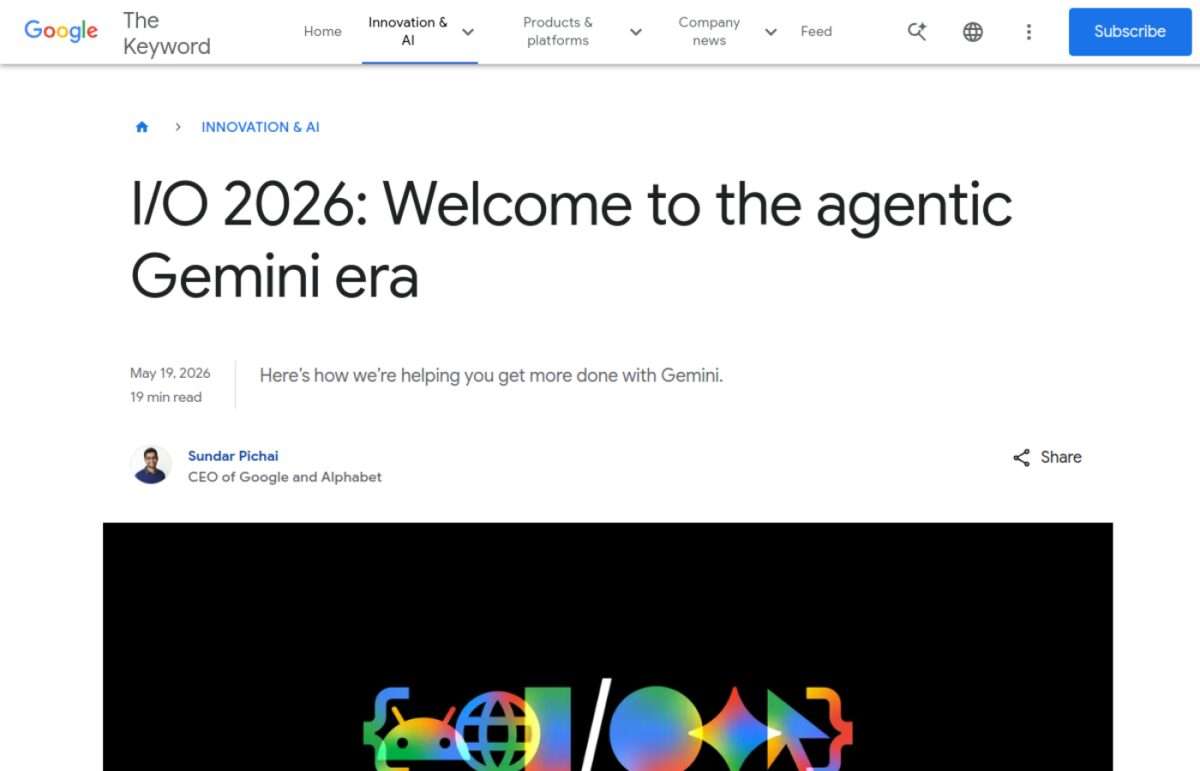
Search Is Changing. A CMO's 2026 Field Guide to AEO.
Sundar Pichai called it the deepest change in Search's history. Here's what every CMO needs to know about AEO and GEO, sourced from Google I/O 2026, OpenAI, Anthropic, Perplexity, HubSpot, Ahrefs, Semrush, and 18 practitioners.
Read article
The Most Trusted Pattern: How to Earn Authority Phrasing in AI Answers
AI sometimes describes brands with phrases like "most trusted" or "industry standard". This guide explains where those phrases come from and how to earn them.
Read article