Search Is Changing. A CMO's 2026 Field Guide to AEO.
Sundar Pichai called it the deepest change in Search's history. Here is what every CMO needs to know about AEO and GEO, sourced from Google I/O 2026 and OpenAI.
On this page
- Pichai just admitted Search has changed
- The agentic layer landed faster than anyone expected
- Apple just made every iPhone a Gemini distribution point
- What the click data shows
- Google's official answer to the penalty question
- Every SEO tool you use just shipped an AEO product
- What the practitioners running this work are saying
- Rand Fishkin, SparkToro and Datos
- Kevin Indig, Growth Memo
- Mike King, iPullRank
- Patrick Stox, Ahrefs
- Jason Barnard, Kalicube
- Andrea Volpini, WordLift
- Gaetano DiNardi, B2B SaaS advisor
- Wil Reynolds, Seer Interactive
- Aleyda Solis, SEOFOMO
- Lily Ray, Amsive
- Brian Dean, Backlinko
- Will Critchlow, SearchPilot
- The academic verdict
- The 90-day playbook
- Where OnlyAEO fits in
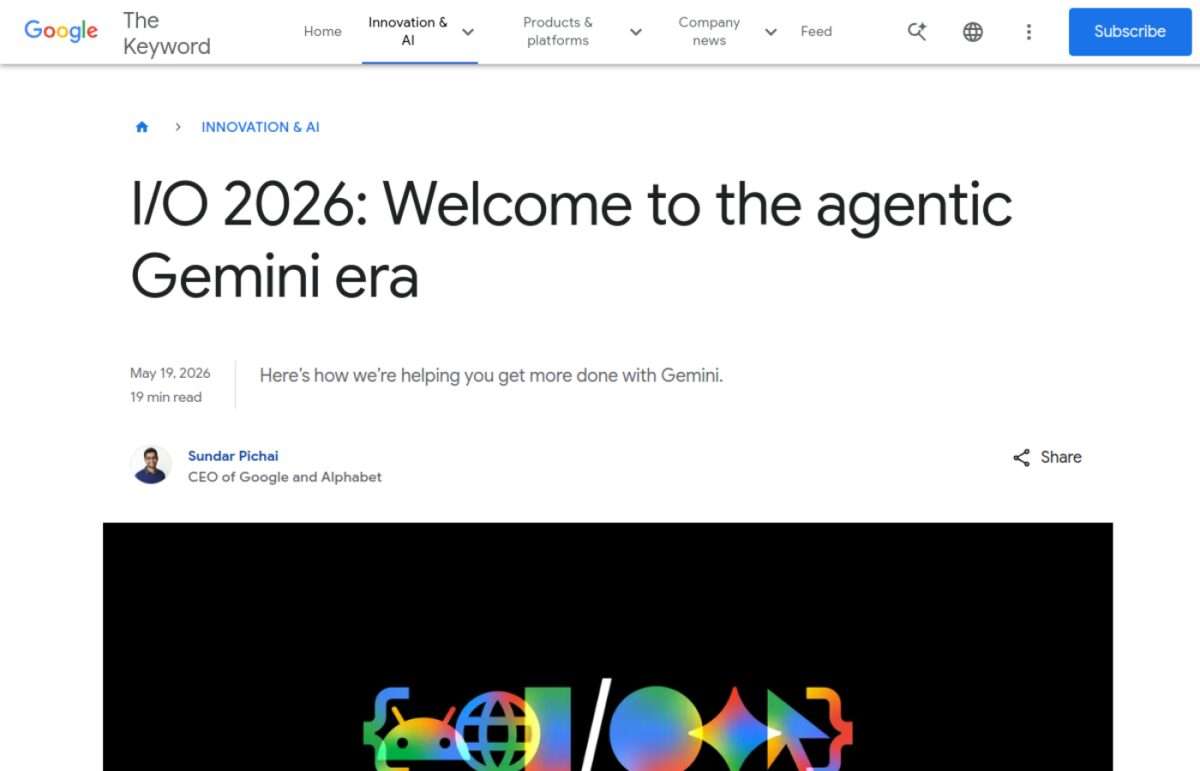
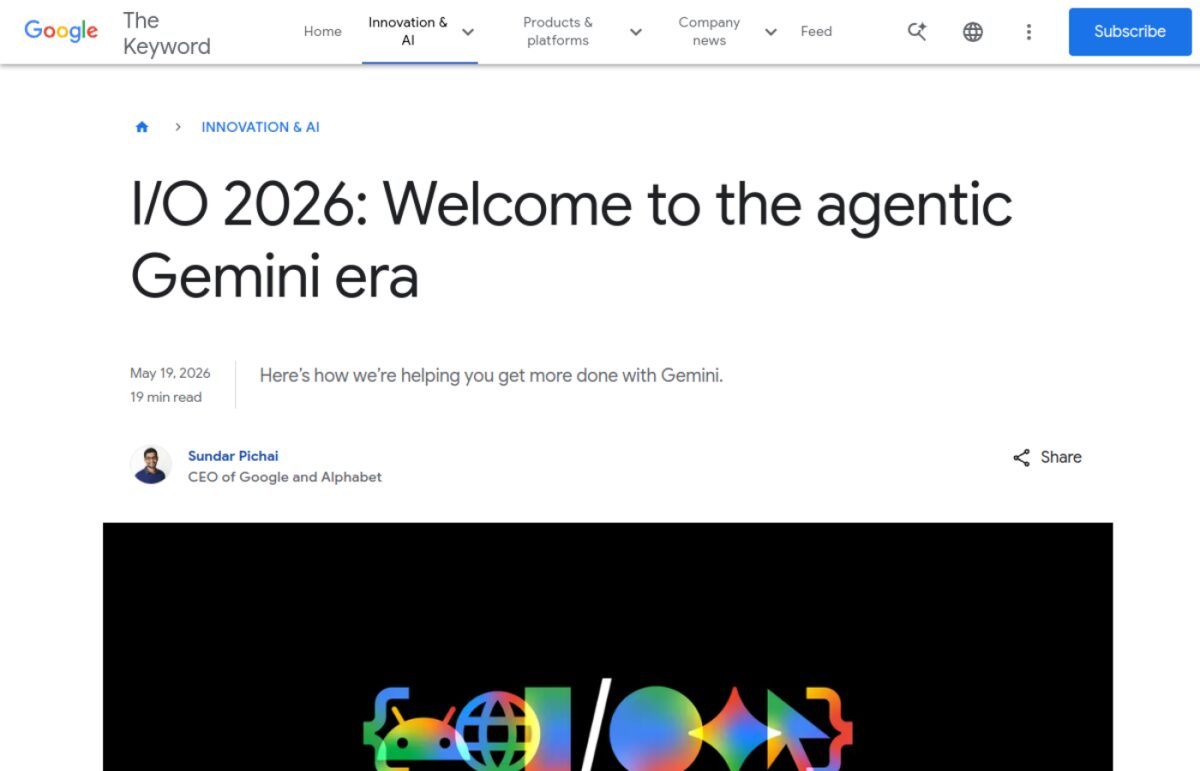
On May 19, 2026, Sundar Pichai stood on the stage at Google I/O and called the transformation of Search "the deepest change in the history of the product."
That sentence was not marketing copy. It was Google's CEO admitting, in front of 7,000 developers, that the product that has defined how humans find information for 25 years has been replaced, by itself.
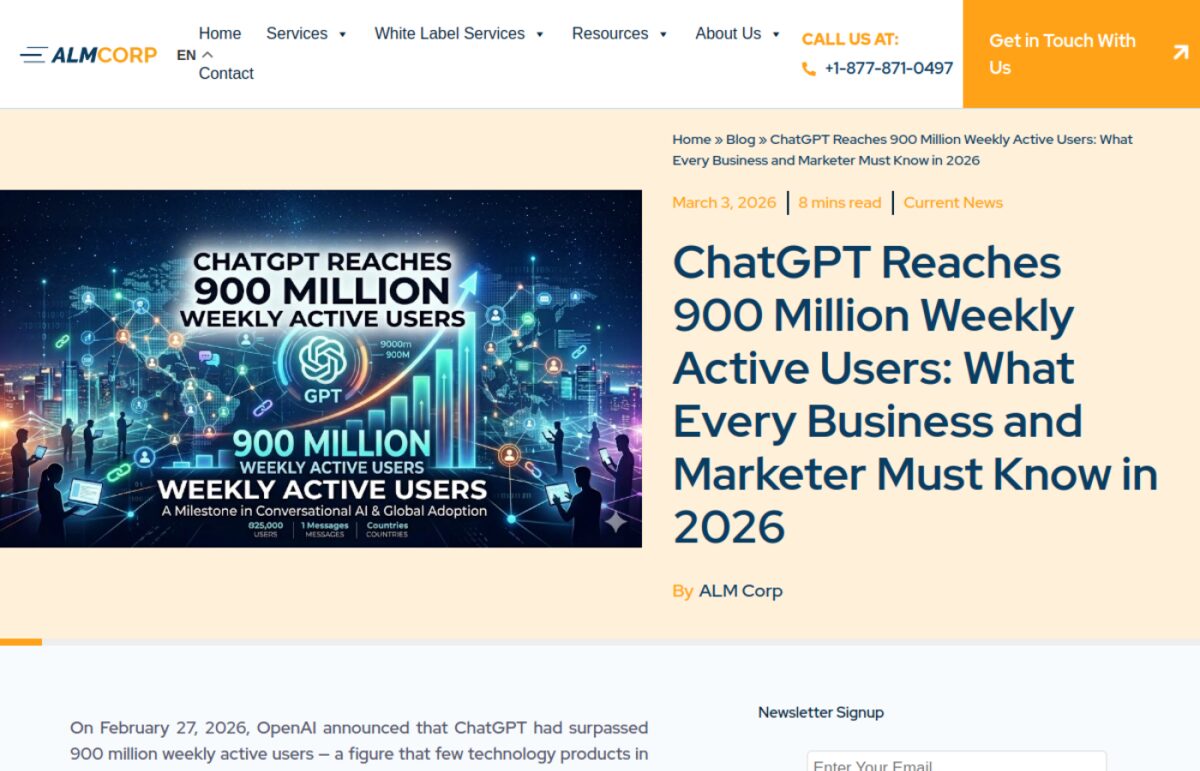
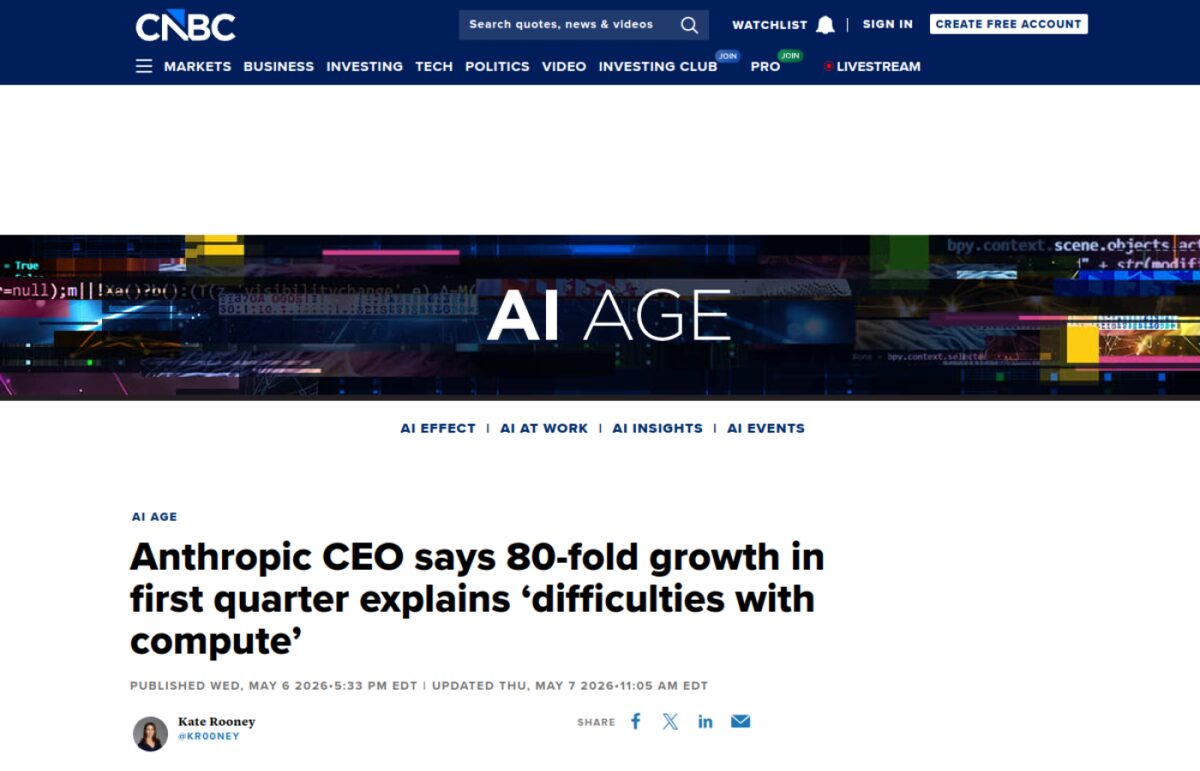
AI Overviews now reaches 2.5 billion monthly users. AI Mode crossed 1 billion in its first year. ChatGPT hit 900 million weekly active users in February 2026. Anthropic's revenue grew 80x in a single quarter.
If you are a CMO and your team is still arguing about whether AEO is real, you are arguing about something the platform CEOs already settled. This is what every marketing leader needs to know, sourced from Pichai's keynote, OpenAI, Anthropic, Perplexity, Apple, Microsoft, HubSpot, Ahrefs, Semrush, and 18 named practitioners.
Pichai just admitted Search has changed
The Pichai keynote landed harder than any marketing analyst report could. Below is the platform-level scoreboard as of May 2026.
| Platform | Latest 2026 number | Source |
|---|---|---|
| AI Overviews | 2.5B monthly active users | Pichai I/O 2026 keynote |
| Google AI Mode | 1B MAU in first year; queries roughly 3x longer than traditional search | Pichai I/O 2026 keynote |
| ChatGPT | 900M weekly active users (Feb 2026), up from 200M a year earlier | TechCrunch |
| Anthropic / Claude | Annualized revenue grew 80x in Q1 2026 to a $30B run rate | CNBC |
| Perplexity | $20B valuation, $200M ARR, 45M MAU (Jan 2026) | TFN |
| Meta AI | 1B MAU across WhatsApp, Instagram, Facebook | Engadget |
Stack those rows on top of each other. Six independent platforms, six independent disclosures, every one of them an admission that the channel that fed B2B and B2C marketing for a generation has structurally changed inside one calendar year.
Pichai's framing matters because it was not a research note. It was a stage declaration from the only executive whose company has anything to lose from saying it. Search Generative Experience went from "ten blue links plus a summary panel" to a redesigned product surface with a multimodal input box and AI Mode as the default for complex queries. Even the most defensive interpretation by Liz Reid, Google's Head of Search, conceded the redesign.
In her stage remarks Reid said: "This new search box does not mean that you'll only get AI responses." Read carefully, that is Google reassuring its publisher ecosystem that some of the legacy click economy survives, not denying the shift. The product surface is now AI-first by default, and the rest of the journey is calibration. Source: Google Search blog.
If the platform CEOs are this candid, the marketing leader's question is no longer "is this real," it is "what does it cost me to be late."
The agentic layer landed faster than anyone expected
The shift CMOs are most underestimating is not the volume of AI search. It is the move from answer engines to action engines. In 2026, three product launches turned "AI search" into "AI does things on your behalf."
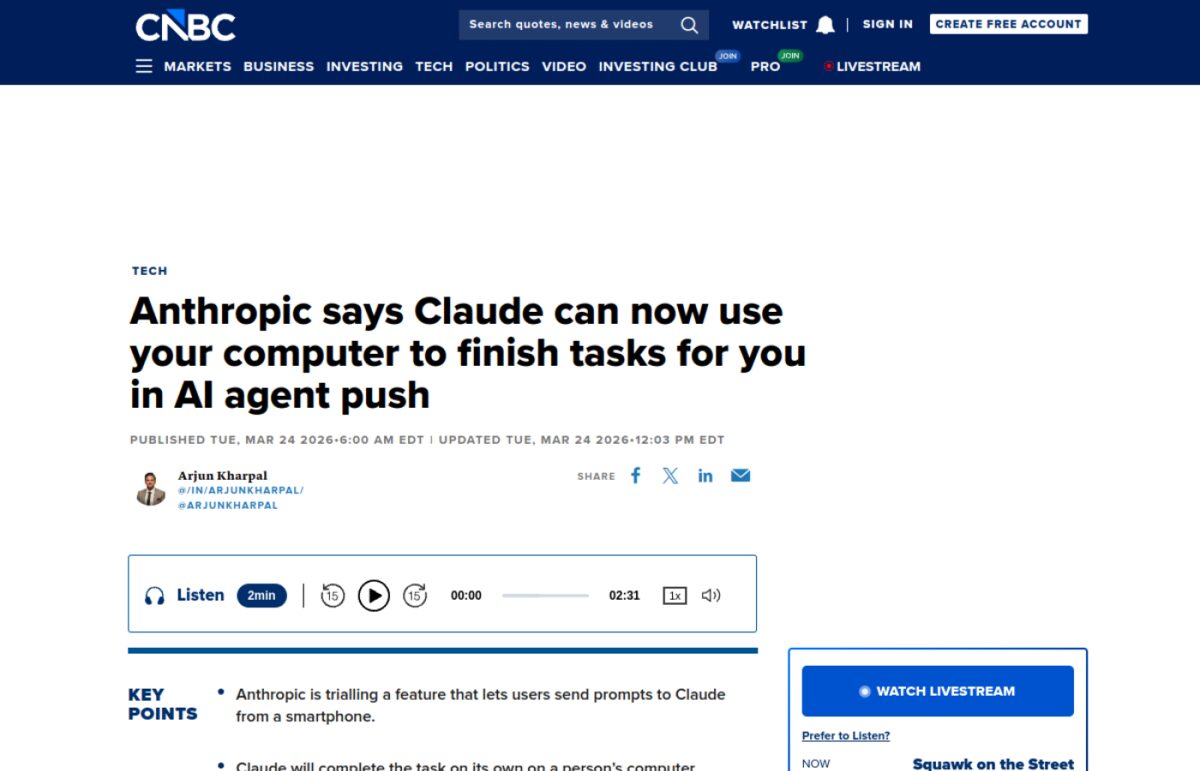
Anthropic Claude Computer Use went generally available in March 2026. Claude now browses the web and clicks through pages on a user's behalf, posting state-of-the-art results on the WebArena benchmark for autonomous browsing. The feature is available across Pro, Team, and Enterprise tiers. Source: CNBC.
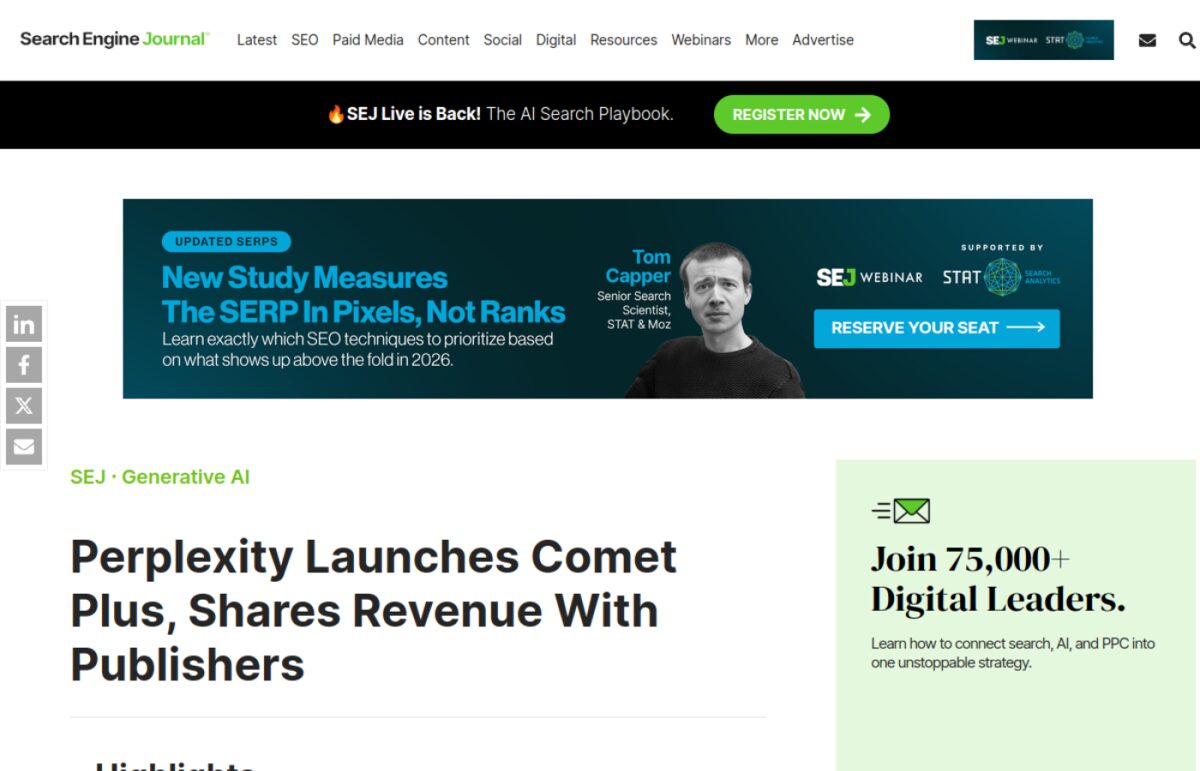
Perplexity Comet shipped to iOS in March 2026, with the Comet Plus subscription ($5/mo) launching in January 2026. Comet Plus introduced a $42.5M publisher revenue pool with an 80/20 split, the first time an AI search engine has paid publishers for citations. Source: Search Engine Journal.
ChatGPT Shopping Research went GA on November 24, 2025. Direct product discovery surface inside ChatGPT, a structural threat to both Google Shopping and Amazon Search. Source: OpenAI.
When the answer engine becomes an action engine, being cited stops meaning "being read" and starts meaning "being chosen." A buyer who never reaches your site can still complete the consideration step inside the AI surface. That is the structural reason CMOs cannot defer AEO another quarter, and it is the part of the shift that the conventional analytics dashboard cannot show.
Apple just made every iPhone a Gemini distribution point
Even the platform holdouts have folded. In early 2026, Apple struck a multi-year deal with Google estimated at roughly $1B per year to power the next generation of Siri with Gemini. ChatGPT integration in iOS already routes complex Siri queries to ChatGPT, and the Gemini layer extends that pattern to native iOS surfaces.
The strategic point for the marketing leader is not which model wins. It is that Apple has effectively conceded AI search. Every iPhone in your buyer's pocket is now a Gemini and ChatGPT distribution surface. The user does not open an app. They ask Siri, and the answer is built by a model that was trained on whatever happened to be cited in its training corpus, optionally refreshed by a real-time citation crawl. Source: Information Age (ACS).
If your brand is not in that citation corpus, the iPhone in your buyer's hand will recommend a competitor by default.
What the click data shows
The platform story sets the table. The user-behavior data closes the deal. The most-cited independent panel on this is the Pew Research Center July 2025 study, which instrumented real Google users.
| Signal | Source | What it shows |
|---|---|---|
| Click rate w/ AI summary | Pew Research, Jul 2025 | Drops from 15% to 8% when an AI summary appears |
| Click rate on AI-cited sources | Pew Research, Jul 2025 | Just 1% click any of the cited source links |
| Zero-click searches | SparkToro | 60% of Google searches end with zero clicks; 80-83% with AI Overview present |
| Daily Mail (UK) AIO impact | Press Gazette | Desktop CTR fell from 25.23% to 2.79% under AI Overviews |
| HubSpot's own customers | HubSpot AEO announcement | Organic traffic down 27% YoY across HubSpot's customer base |
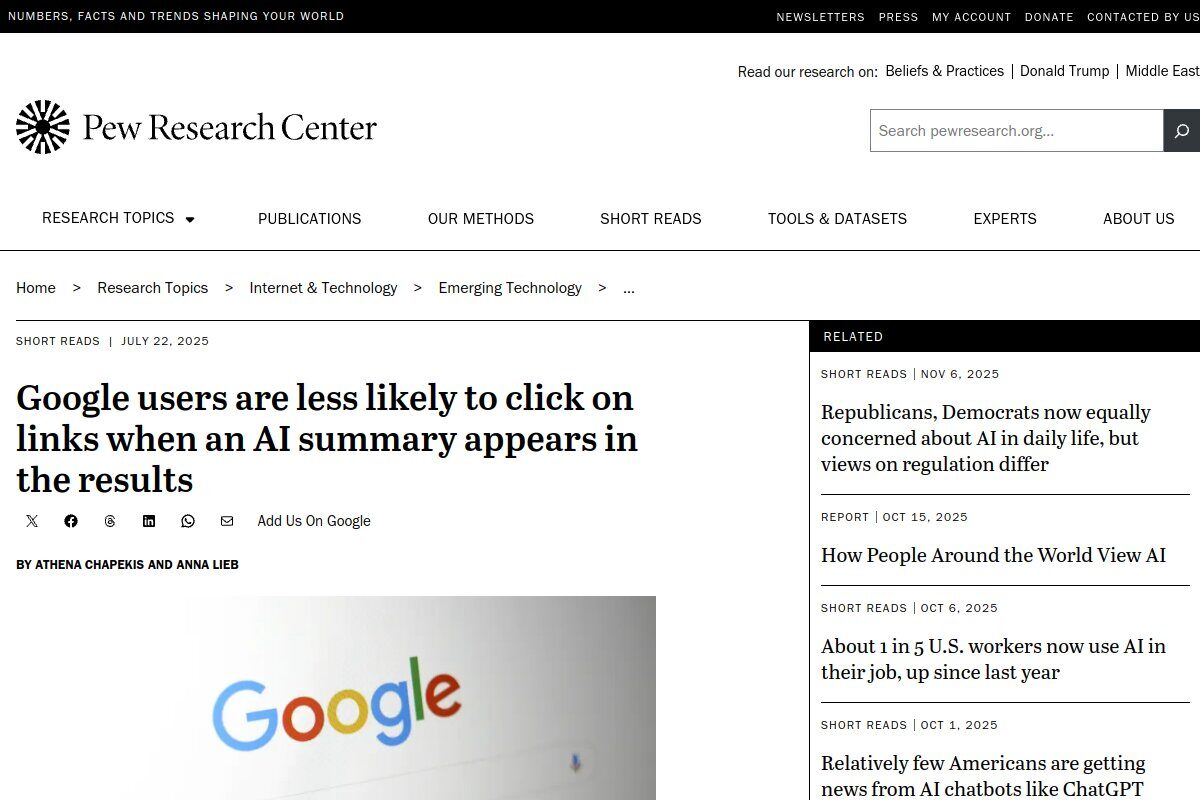
The HubSpot row is the punchline. This is not a vendor selling something it has a stake in. HubSpot published the number from its own marketing customer base, while it was simultaneously launching an AEO product. Twenty-seven percent year-over-year organic decline is the average across the customer set. The distribution underneath that average is bimodal: brands that took AEO seriously held position or grew, brands that did not lost a quarter of their organic traffic.
Google's official answer to the penalty question
The single most important section of this guide is the one that resolves the penalty fear in twenty-two words from the only source that gets to say it.
On May 15, 2026, four days before Pichai's keynote, Google quietly published an official documentation page at developers.google.com titled "Optimizing your website for generative AI features on Google Search." It is the canonical answer.
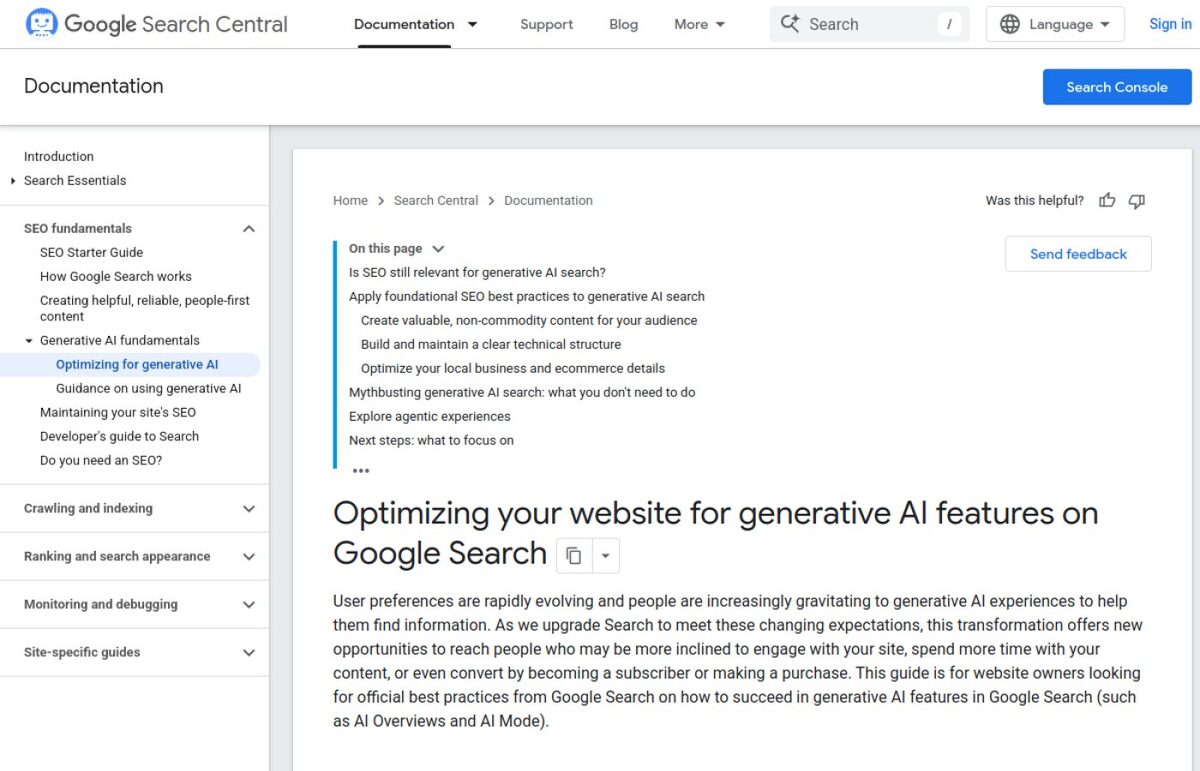
The page opens with this sentence:
"From Google Search's perspective, optimizing for generative AI search is optimizing for the search experience, and thus still SEO."
Read it carefully. Google is not warning against optimizing for AI. Google is saying the activity already has a name (SEO) and that there is no separate set of rules to fear or comply with. The "Answer Engine Optimization" and "Generative Engine Optimization" labels are positioning vocabulary on top of practices Google has been documenting for years.
The page then enumerates what works and what does not, in unusually direct language for the Search team.
What Google says works:
- Non-commodity, helpful, people-first content with a unique point of view
- Solid technical structure that crawlers can render fully (clean HTML, fast pages, accessible markup)
- Clear descriptive headings and a logical heading hierarchy
- Supporting media (images, video, tables) that helps the reader, not just the algorithm
- Properly maintained local business and ecommerce details (address, hours, pricing, availability)
What Google says skip:
- llms.txt files and other "special" markup, because no production AI system currently uses them
- "Chunking" or restructuring content into AI-only formats
- Rewriting pages for AI consumption that degrade the experience for human readers
- Buying inauthentic mentions or coverage to manipulate AI corpora
- Over-indexing on schema markup as a substitute for substantive content
The penalty risk is volume multiplied by thinness, not the act of optimization. Mass-producing commodity AI content violates Google's Scaled Content Abuse policy and depresses ranking authority. Optimizing well-crafted pages for AI citation is exactly what Google is asking you to do.
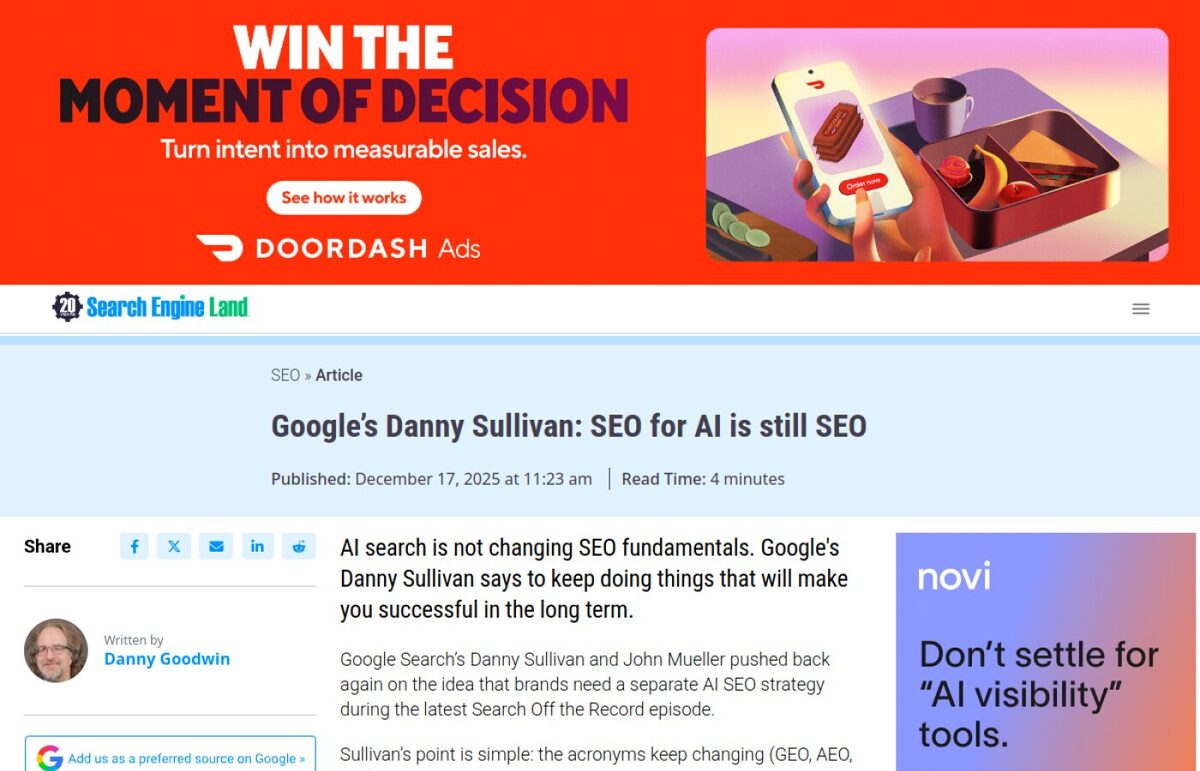
Danny Sullivan, Google's Public Liaison for Search, reinforced the same line on the December 2025 episode of Search Off the Record: "SEO for AI is still SEO. Generative Engine Optimization is not separate from SEO, it is a subset of it." Search Engine Land covered the episode and put the quote on the front page. If you need a practical translation of what Google is asking for at the page level, see our AEO brief template for citation-worthy drafts.
Every SEO tool you use just shipped an AEO product
The "wait for my vendor to add AEO" position is no longer available. In the six months leading up to publication, every major SEO and marketing platform shipped an AEO surface. The table below is the most CMO-persuasive piece of evidence in this guide.
| Vendor | Shipped (2025-2026) | What it does |
|---|---|---|
| HubSpot | HubSpot AEO (April 14, 2026) | Brand visibility dashboard, sentiment, competitor share-of-voice, CRM-powered prompt suggestions |
| Ahrefs | Brand Radar (Jan 2026) | Custom prompt tracking across ChatGPT, Perplexity, Gemini, Copilot, AI Overviews / AI Mode, plus YouTube, TikTok, Reddit; 243M+ search-backed prompts |
| Semrush | Enterprise AIO + AI Visibility Toolkit | 213M+ prompt database; tracks ChatGPT, Perplexity, Gemini, Claude, Google AI Mode (built on the 2024 Datos acquisition) |
| Moz | AI Research Toolkit | Cross-platform AI citation tracking on Moz Pro Medium and above |
| Conductor | AgentStack (April 2026) | Native LLM apps inside ChatGPT, Claude, Copilot + MCP server + turnkey AEO agents |
| BrightEdge | AI Catalyst | Brand presence + sentiment across AI Overviews, ChatGPT, Perplexity |
| Surfer SEO | AI Tracker + AI Search Guidelines | 25-prompt tracker + Auto-Optimize button in Content Editor |
| Clearscope 2.0 | AI Citations Content View | Repositioned from keyword scorer to AI-search content platform |
| Yoast | llms.txt support | One-click llms.txt generation on free + Premium plans |
| Microsoft Bing | AI Performance dashboard (Feb 9, 2026) | Free citation tracking across Microsoft Copilot and Bing AI summaries |
| Profound | Series C, $96M at $1B valuation (Feb 2026) | Pure-play AEO platform; customers include Ramp, MongoDB, Indeed, US Bank, Figma |
| Otterly.ai | Recommendations feature (April 2026) | Citation tracking across ChatGPT, Perplexity, AI Overviews + Mode, Gemini, Copilot |
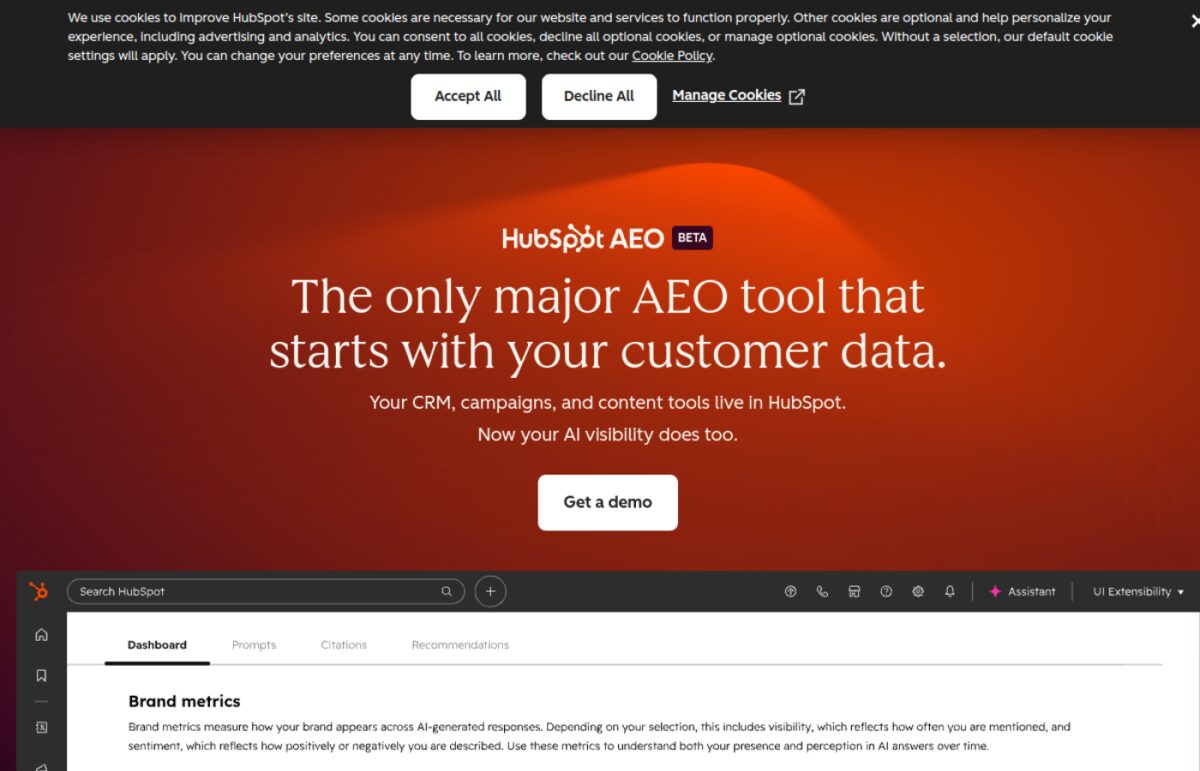
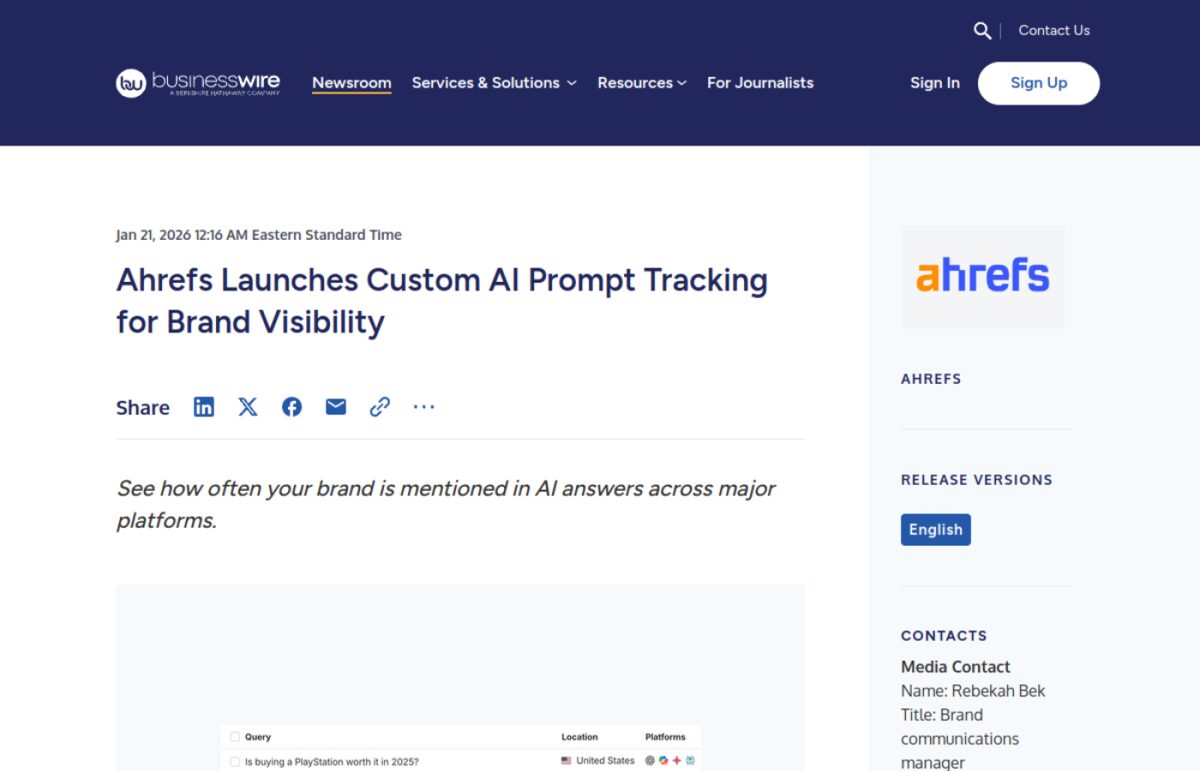
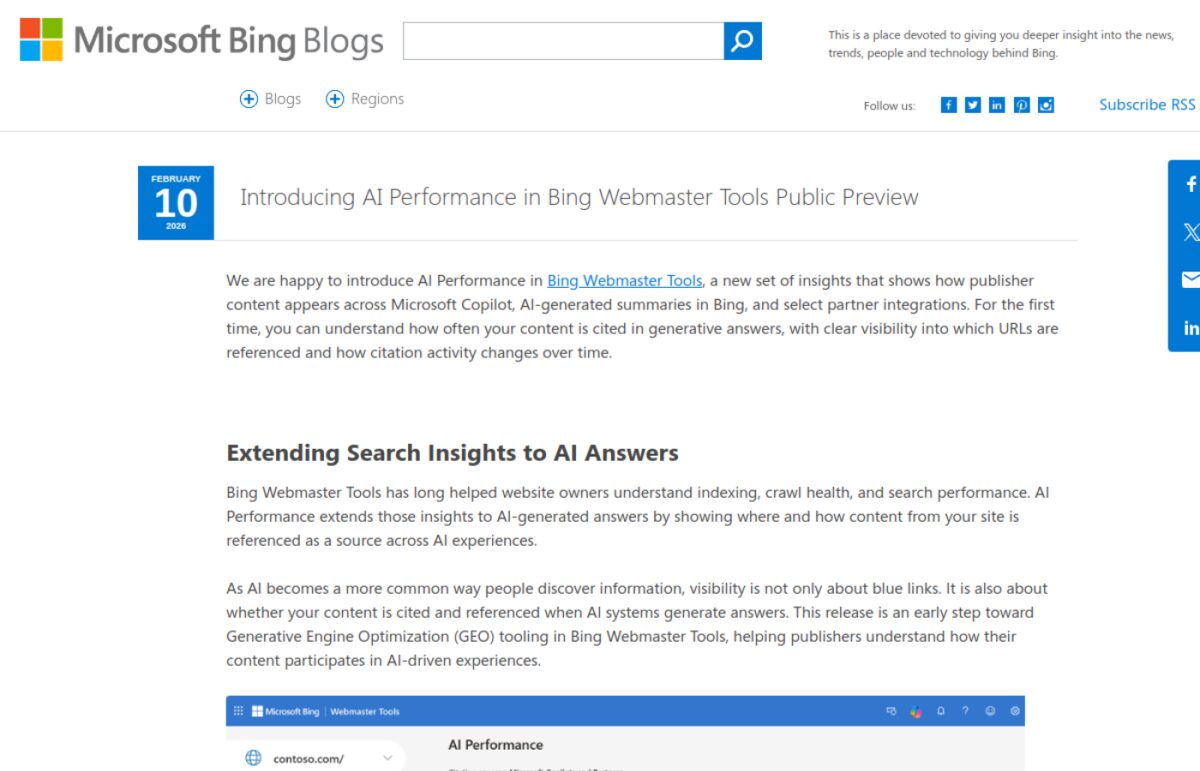
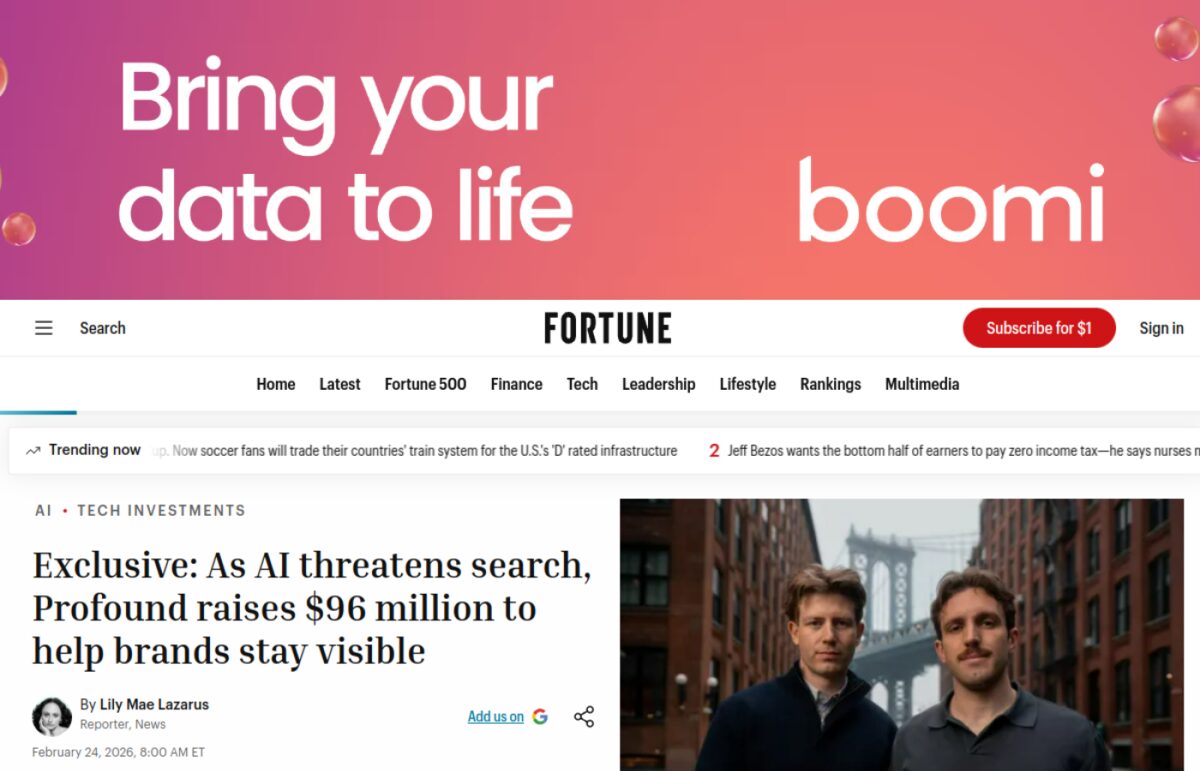
Conductor's 2026 AEO and GEO Benchmarks report analyzed 3.3 billion sessions across 13,000+ domains. AI referrals are still roughly 1 percent of traffic in their dataset, which is useful to disarm the "AEO is overhyped" objection while making the urgency case at the same time. That 1 percent converts dramatically better than the other 99 percent. The pure-play valuations confirm investor consensus: Profound at a $1B post-money in February 2026 is the kind of valuation only category leaders earn.
When HubSpot, Semrush, Ahrefs, Moz, Conductor, BrightEdge, Surfer, Clearscope, Yoast, Microsoft, and a pure-play category leader (Profound) all ship product to address the same problem inside a six-month window, that is what consensus looks like in this industry. If your AEO strategy is "wait for our existing vendor to add it," the wait is over. You can now choose between any of them or invest in the dedicated layer above them. See our AEO budgeting guidance for year one for a frame on which mix actually pays back.
If you are weighing Profound against an AEO platform our team can run for you, our OnlyAEO vs Profound comparison lays out who does the work in each model.
What the practitioners running this work are saying
Twelve of the most credible operating voices in the field, across very different vantage points, have converged on the same conclusion. The pattern across the gallery is what matters: independent voices, independent data, one direction.
Rand Fishkin, SparkToro and Datos
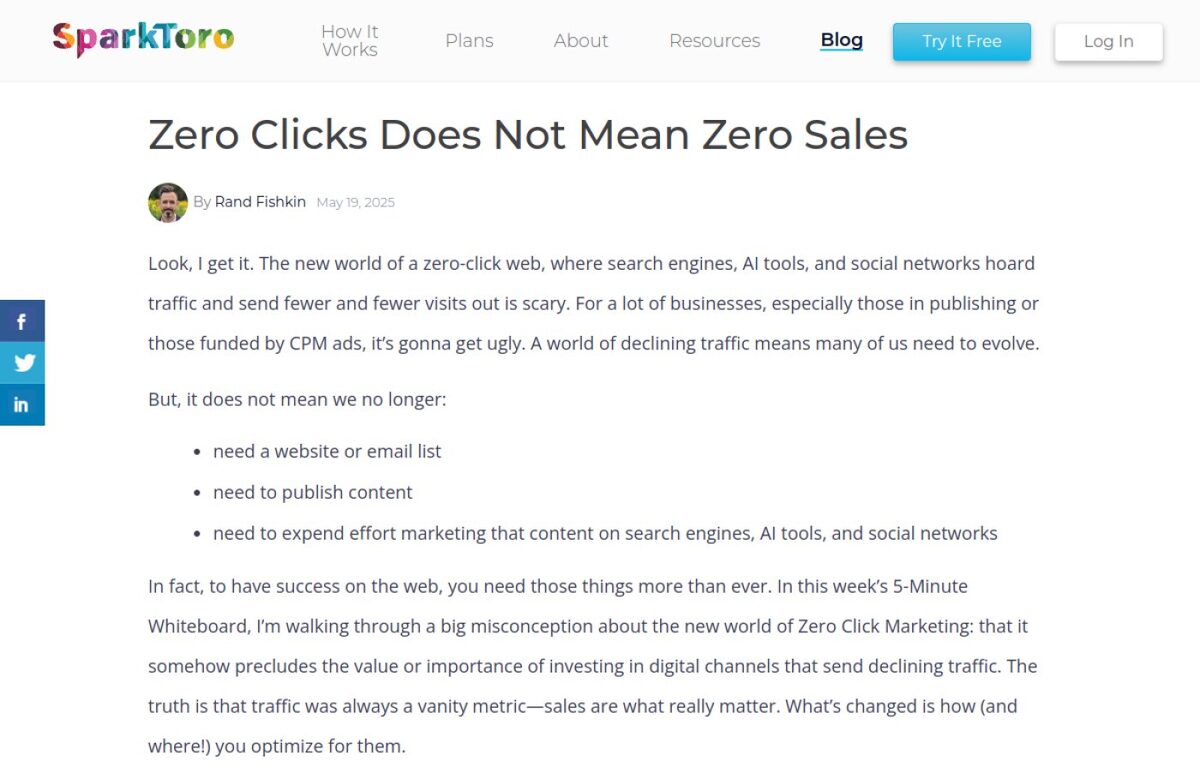
Fishkin's zero-click research updated in 2025 quantifies the structural shift. Sixty percent of Google searches end with zero clicks. AI tool share roughly tripled in fourteen months. In a 2,961-prompt experiment SparkToro ran across ChatGPT, Claude, and Google AI, the same prompt returned the same brand list less than one time in a hundred. His advice: stop measuring traffic, start measuring mentions.
Kevin Indig, Growth Memo
Indig analyzed 1.2 million ChatGPT responses in his State of AI Search Optimization 2026. Two stats no other study has surfaced: 44.2 percent of all LLM citations come from the first 30 percent of a page's text, and 80 percent of URLs cited by LLMs do not rank in Google's top 100 for that query. The SEO playbook of "rank in top 10 organically" does not translate cleanly to AEO. AI citation has its own logic.
Mike King, iPullRank
Two-time Search Engine Land "AI Search Marketer of the Year." His framework, Relevance Engineering, optimizes for how well a passage answers an underlying question in language a model can vectorize and cite. The most-cited finding from his team's research: "Citing sources, being more authoritative, and including statistics are the strongest correlated patterns with appearing in AI-generated results."
Patrick Stox, Ahrefs
Stox's data from Ahrefs' own properties is the conversion stat CMOs actually care about. At Ahrefs Evolve 2025, he disclosed that AI-referred traffic converts at 23 times the baseline rate on Ahrefs. Specifically, 0.5 percent of AI visitors produce 12.1 percent of signups. That ratio is the single most important number for a CFO who is deciding how to score a new channel.
Jason Barnard, Kalicube
Barnard coined the term Answer Engine Optimization in 2018, the longest-standing voice in the discipline. He built the Kalicube Process, the framework that scaled AEO from theory to deliverable. An Authoritas study in 2025 found Barnard himself appears as the canonical source on AEO across LLMs with 10/10 consistency. His version of the punchline: "Be the entity that AI systems trust."
Andrea Volpini, WordLift
Volpini's thesis: structure is the moat. Knowledge graphs and semantic markup are the durable infrastructure underneath AEO. His estimate, defensible in board rooms: by February 2027, AI agents will guide more than $1 trillion in annual global e-commerce purchases (10 to 15 percent of the $9 to 10 trillion market). His WebMCP essay is the strongest "durable infrastructure versus ephemeral hacks" framing a CMO can borrow.
Gaetano DiNardi, B2B SaaS advisor
DiNardi's "dark SEO funnel" reframes the measurement problem. An LLM recommends your brand. The buyer Googles the brand name directly. The session arrives via branded search. Traffic no longer proves SEO success, because the AEO moment never shows up in your analytics. This is the B2B SaaS reframing every CMO needs to hear and bring to the marketing leadership meeting.
Wil Reynolds, Seer Interactive
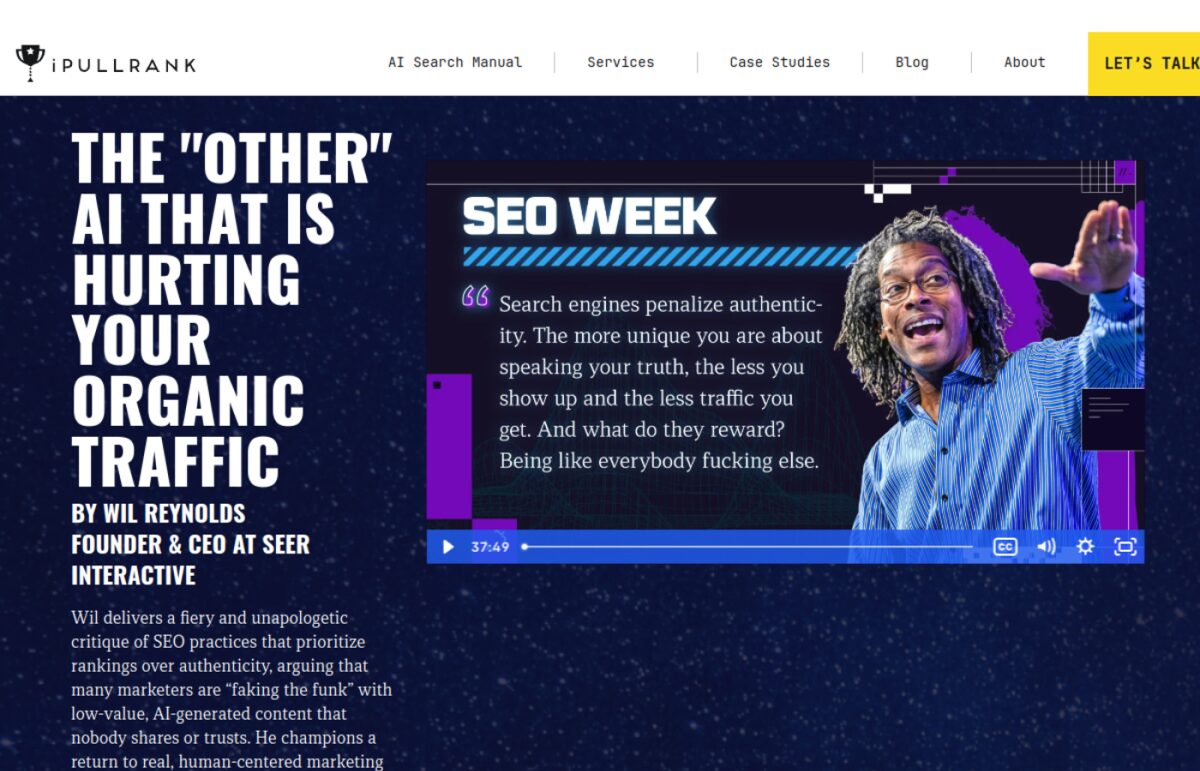
Reynolds walks the talk. Seer's own site saw a 41 percent organic traffic drop in 2024, larger than Gartner predicted. And yet, newsletter signups rose 65 percent and revenue grew. Traffic is not the goal anymore. The SEO Week 2025 recap is the cleanest articulation of why a 41 percent decline can be a healthy outcome if the underlying revenue mix is moving in the right direction.
Aleyda Solis, SEOFOMO
The reference industry checklist. Solis's empirical findings from running her AI Search Content Optimization checklist across hundreds of pages: pages with rich schema markup appear in AI-generated answers roughly 34 percent more often, and Q&A formatted material is approximately 2.8 times more likely to be cited than the same information presented as flowing paragraphs. AEO is a measurable refinement of how you structure pages.
Lily Ray, Amsive
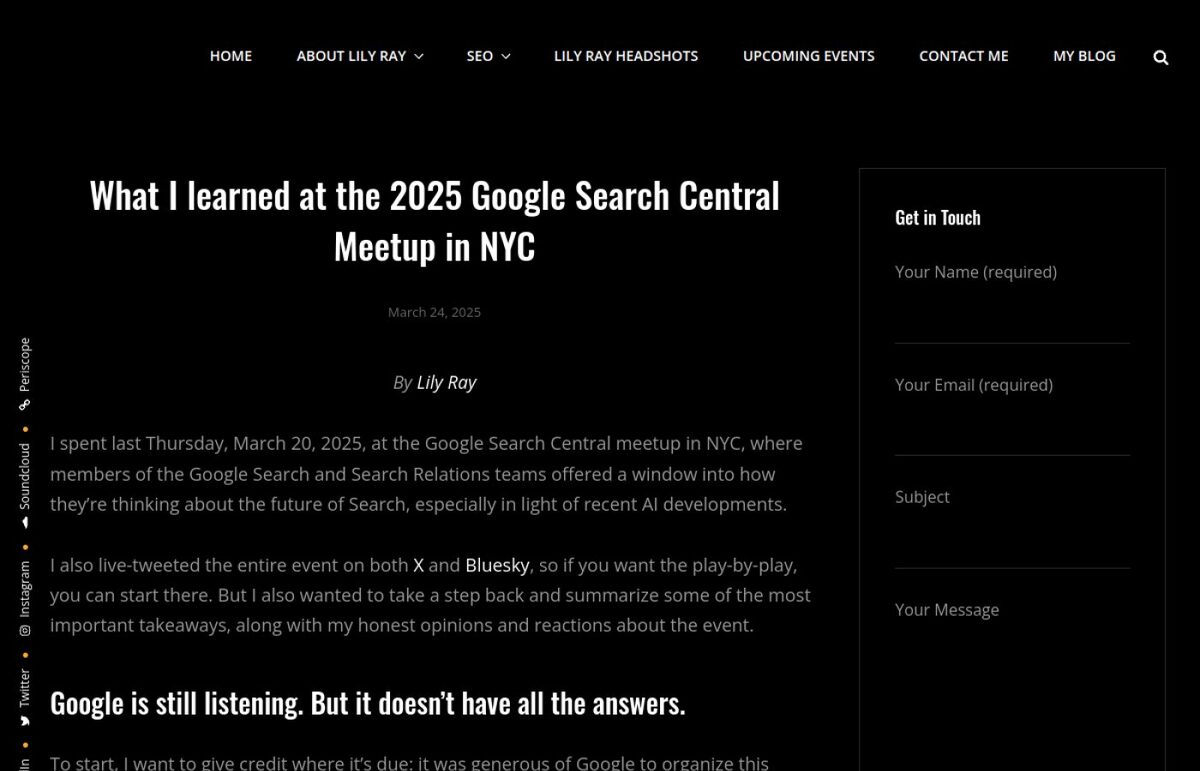
Ray's meetup recap from the 2025 Google Search Central event in NYC is the most-read write-up of what Google's search team actually said on the record. Her takeaway: authentic E-E-A-T (experience, expertise, authoritativeness, trustworthiness) is the durable signal. The biggest risk in 2025 and 2026 is not "doing AEO." It is publishing thin AI-generated content at scale, which violates Google's spam policies.
Brian Dean, Backlinko
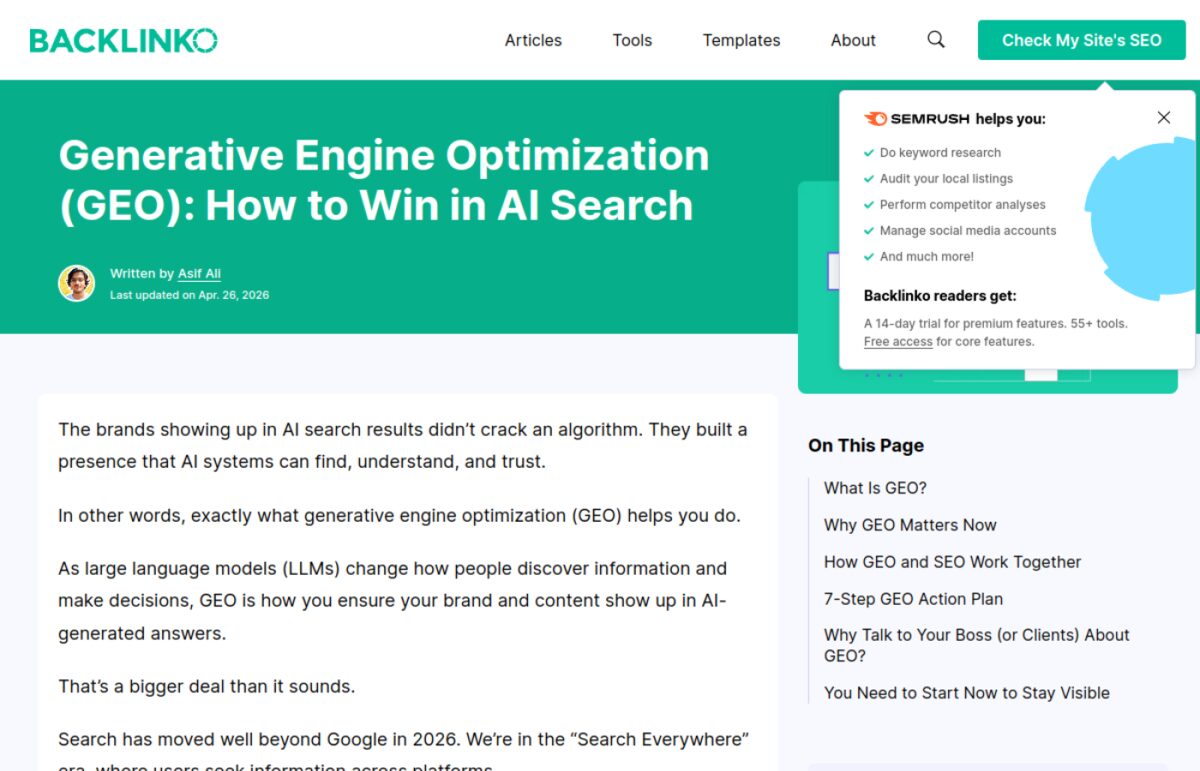
The single most-quoted number on the practitioner side is Dean's: LLM traffic to Backlinko is up 800 percent year over year. Mainstream-marketer credibility, which matters because Brian's audience is who CMOs already trust on SEO. When the canonical mid-market SEO voice publishes an 800 percent number, the case has crossed from early-adopter to mainstream.
Will Critchlow, SearchPilot
The only voice in this gallery with thousands of controlled A/B tests under it. Critchlow's position on AI traffic in analytics is direct: "Without a testing methodology, adapting to AI search is just guesswork." If you cite anyone for the rigor angle in a board meeting, cite him. The discipline he brings is the discipline that distinguishes "we ran the playbook" from "we believe the playbook works."
The academic verdict
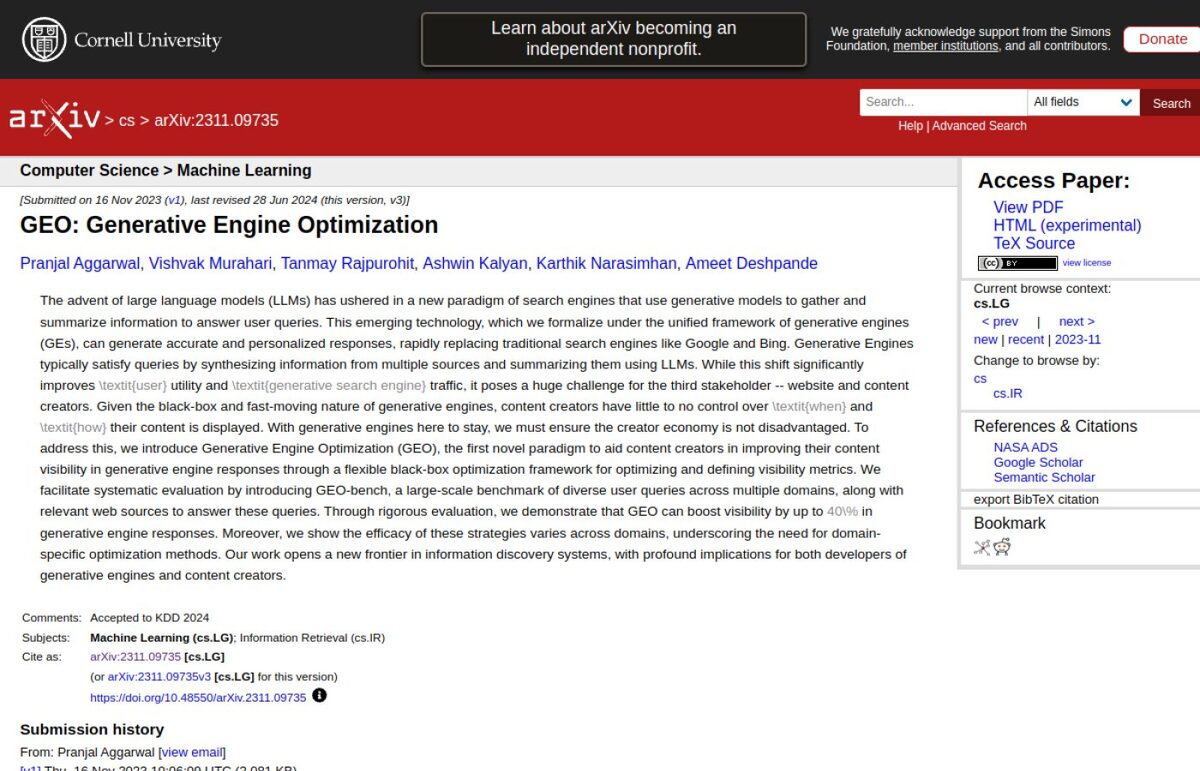
When a board member asks if AEO is real, the most defensible answer is the Princeton paper. Aggarwal et al. presented GEO: Generative Engine Optimization at KDD 2024, one of the most rigorous data-mining conferences in computer science. They built GEO-bench, a benchmark of 10,000 queries across eight content domains, and tested nine distinct content modification strategies on the same query set.
| Tactic | Effect on AI citation likelihood |
|---|---|
| Adding source citations | +115.1% relative visibility lift (for content ranked 5th) |
| Quotation addition | +30 to +40% lift |
| Statistics addition | +30 to +40% lift |
| Fluency optimization | +30 to +40% lift |
| Authoritative voice | +30 to +40% lift |
| Keyword stuffing | No measurable lift |
| Generic content padding | No measurable lift |
Two things are true at once. First, the tactics that work are large and replicable. A 115 percent lift from adding source citations is not a rounding error. Second, the tactics that do not work are the same ones that did not work for human readers either. The "AEO is keyword stuffing rebranded" objection does not survive peer review. Every tactic that improved AI citation in this study also made the content better for humans.
The 90-day playbook
The strategic case is settled. The remaining question is operational. What does the first quarter of work look like?
| Weeks | Workstream | What it looks like |
|---|---|---|
| Weeks 1 to 2 | Audit | Baseline AI visibility: capture citation frequency for your brand and top 5 competitors across ChatGPT, Perplexity, Gemini, Google AI Mode, AI Overviews, and Claude. |
| Weeks 3 to 6 | Content sharpening | Pick your top 30 commercially important pages. For each, add a 40 to 60 word answer capsule at the top, a data table with cited sources, FAQ schema, clear authorship, and refreshed published-date metadata. |
| Weeks 4 to 10 | Off-site | Inventory earned mentions in trusted third-party publications. Identify 5 to 10 priority publications that LLMs cite heavily in your category. Plan a 6-month PR slate. |
| Weeks 6 to 12 | Measurement | Implement AI-referrer tracking in GA4. Add citation tracking to the monthly marketing dashboard alongside organic search. Define share-of-voice targets versus the top 3 competitors. |
None of these activities are speculative or risky. They are extensions of work most marketing teams are already doing, with sharper focus on the surfaces where buyers are increasingly deciding. The hardest part is not the tactics. It is reallocating the calendar inside a content team that has been measured on Google organic for fifteen years. Our AEO content strategy guide for marketing executives is the operator-level extension of this playbook, and our citation-tracking metrics work covers the measurement piece in detail.
Frequently asked questions
Will Google penalize me for doing AEO?
No, unless your AEO program mass-produces thin content or buys inauthentic mentions. Both of those would have been penalized in 2018 too. Google's official May 2026 documentation says optimizing for generative AI search is 'still SEO,' and Danny Sullivan reinforced the same line in December 2025. The penalty risk is volume multiplied by thinness, not the act of optimization. Well-crafted answer capsules, FAQ schema, and clearly authored content are exactly what Google's own guidance recommends, which is why every AEO platform that shipped in 2026 sells more or less the same checklist.
Isn't AEO just SEO with a marketing rebrand?
The vocabulary is partly rebranded. The work underneath is not. AEO and GEO refer to a specific subset of SEO practices that have an outsized effect on whether AI systems cite a brand: explicit source citations, Q&A formatting, statistics, fluency, authoritative voice, and dense entity-level metadata. The Princeton GEO paper measured a 115 percent citation lift from adding source citations alone. Kevin Indig found 80 percent of LLM-cited URLs do not even rank in Google's top 100 for the query. That is not a rebrand. It is the discovery of which subset of SEO practices the new generation of AI surfaces is most sensitive to.
Won't AI search just cannibalize my organic traffic?
Some of it will, yes. Pew shows clicks falling from 15 percent to 8 percent when an AI summary appears, and HubSpot reports a 27 percent year over year drop in organic traffic across its own customer base. But the buyer did not vanish. They formed an opinion inside the AI surface and moved to the consideration step. If your brand is cited in that summary, you participate. If you are not, you do not. The choice is not 'protect organic traffic' versus 'invest in AEO.' The choice is which surface you defend your share of mind on as the buyer journey reshapes around AI.
Is the data really showing AI-driven revenue, or hype?
It is showing revenue. Patrick Stox disclosed that Ahrefs sees AI-referred traffic converting at 23 times the baseline rate, with 0.5 percent of AI visitors producing 12.1 percent of signups. Pichai's I/O 2026 keynote put AI Overviews at 2.5 billion monthly users and AI Mode at 1 billion. The volume is still small as a share of total sessions in most categories, around 1 percent in Conductor's 13,000-domain dataset, but the revenue per session is the highest in the marketing mix. The right mental model is mobile internet in 2008. Small in volume, future-defining in importance.
What's the actual downside if I do AEO wrong?
The documented downsides are the same as for SEO done badly. Mass-produced thin content can trigger Google's Scaled Content Abuse policy and depress rankings across the affected directory. Inauthentic mention campaigns risk brand-safety review and trade-press exposure. Over-investing in llms.txt files as a standalone deliverable wastes budget on a tactic Google has explicitly said no production AI system reads. None of these failure modes apply to the core AEO workflow of producing fewer, better, citation-worthy pages. The risk profile of doing AEO well is materially lower than the risk profile of doing nothing.
Should I wait for my SEO vendor to add AEO features?
They already did. HubSpot, Ahrefs, Semrush, Moz, Conductor, BrightEdge, Surfer SEO, Clearscope, Yoast, and Microsoft Bing all shipped AEO surfaces between January and April 2026. Profound raised a $96 million Series C at a $1 billion valuation as a pure-play category leader. The wait is over. Your decision is now between three options: stay with your incumbent vendor's bolt-on AEO surface, switch to a pure-play platform, or work with a partner who runs the full strategy and measurement layer above the tools. Doing nothing is not on the option list anymore.
Won't this all be replaced by the next thing?
The interface will keep changing. The underlying skill will not. The tactics that earn AI citations today (sourced statistics, Q&A formatting, authoritative voice, clean structure) are the same tactics that distinguished credible journalism from blogspam in 2015 and are likely to remain the signal that any future answer engine selects on. The Princeton GEO paper, Kevin Indig's 1.2M-response study, and Aleyda Solis's empirical checklist all converge on the same underlying patterns. AEO is durable because what it asks you to produce is durable: clear, sourced, well-structured content a smart reader would prefer.
Where OnlyAEO fits in
Everything above this section is independent evidence. None of it depends on a vendor pitch. If you decide AEO is real and worth investing in, the next question is whether to run it internally, with a generalist agency, or with a partner built specifically for it.
What OnlyAEO does:
- AI visibility audits across ChatGPT, Claude, Gemini, and DeepSeek, scored at the brand and category level
- A content pipeline written to Google's published quality bar, with the citation patterns the Princeton GEO paper measured (source citations, statistics, authoritative voice, Q&A structure, schema)
- Distribution and entity building in the publications and communities your category's LLM training and citation corpora actually weight
- Monthly measurement against named competitors. See our work on brand reputation and buyer perception under AI-mediated search for the executive framing
What we will not do:
- Sell llms.txt as a primary deliverable, because Google has confirmed it is not used by production AI systems
- Generate thin content at scale, because that is the only documented way to lose ranking authority while pursuing AEO
- Buy inauthentic mentions, because the brand and trade-press downside is larger than any short-term citation lift
The brands that win this transition are the ones with a clear point of view, the discipline to produce a small number of excellent pages, and the patience to compound for two to four quarters. The evidence in this guide says the window is open, the rules are friendlier than the skeptics fear, and the platforms have already decided. The only question left on the table is whether you act on it before your category competitors do.