How to Run a 30-Day AEO Pilot That Wins the Client Retainer
A tight 30-day AEO pilot converts skeptical clients into retainers better than any pitch deck. Here is the exact scope, weekly plan, deliverables, and pricing.

On this page
Clients are walking into your agency asking why they do not show up in ChatGPT. It is a live budget waiting for whoever answers it credibly. The problem is that answer engine optimization is new enough that a cold pitch for a six-month retainer lands as a bet on an unproven service. The fix is not a better deck. It is a 30-day pilot: a small, fixed-scope engagement that turns "trust us" into "here is your citation share on day one, here is what we shipped, and here is what moved." A competent agency runs the pilot precisely because it expects the pilot to convert. When the client already has an SEO agency it trusts, winning the pitch against an incumbent SEO vendor shows how to scope a pilot that coexists.
This piece is the operating manual for that pilot: how to scope it so it stays profitable, the week-by-week plan, what you can honestly promise inside 30 days, the deliverables that trigger a retainer signature, and how to price it. If you are still deciding whether to offer AEO at all, start with how digital agencies can add AEO as a new service line and come back here to run your first one.
Why a pilot beats pitching a retainer cold
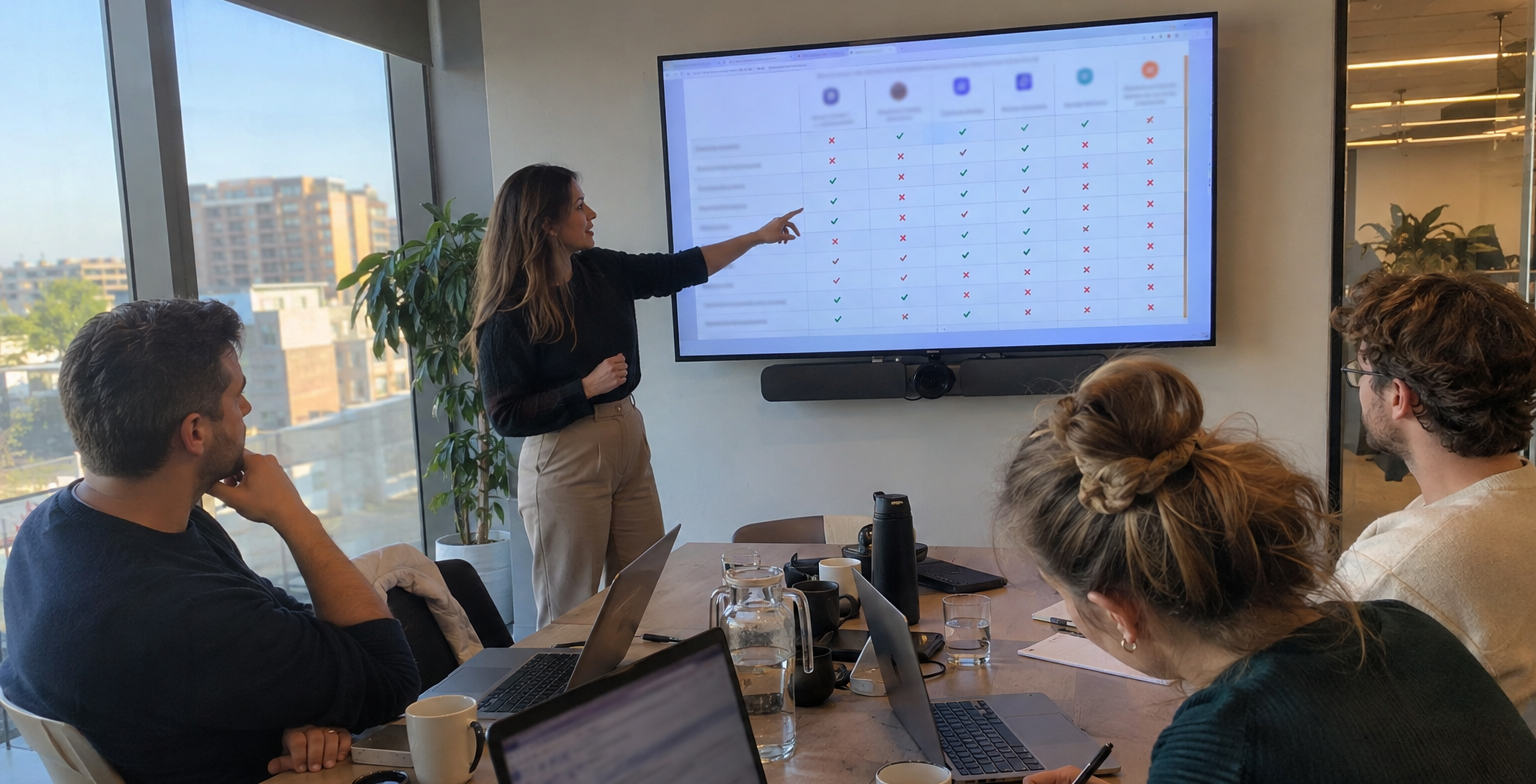
AEO has a proof problem. The client cannot see their AI visibility, so they cannot feel the pain the way they feel a traffic drop in Google Analytics. A pilot solves this in the first week by making the invisible visible. Once a client sees they are named in 8 percent of the buying conversations that matter while a competitor is named in 40 percent, the conversation stops being about whether AEO is worth it. It becomes about how fast you can close the gap.
A pilot also protects you. AEO results compound over 60 to 90 days, which is longer than an anxious client's patience if you sold them a vague retainer. The pilot resets expectations honestly: month one is baseline and the fastest fixes, and the compounding happens in the months the retainer covers. You are not overpromising a 30-day miracle. You are proving the method works and the direction is right. The client-side view, including what pass and fail look like, is laid out in how a pilot proves citation lift.
Scope the pilot tight or lose money
The single most common way agencies lose money on a pilot is letting it sprawl. A pilot is not a full program. Hold these limits:
- One market. One geography, one language, one buyer segment. Not the client's entire addressable market.
- One product line. The client's flagship or highest-margin offering, not the full catalog.
- 50 to 150 prompts. The real buying questions a customer would ask an AI assistant about that product line in that market. This prompt set is the spine of the whole pilot.
- A fixed page count for fixes. Commit to restructuring a set number of existing pages, for example 8 to 15, rather than "the site."
That scope is enough to produce a real baseline, ship meaningful fixes, and show early movement, while staying inside a flat fee you can deliver profitably. Build the prompt set the way you would run any AI visibility audit: map the buyer's real questions, not the keywords the client wishes they ranked for.
The 30-day plan, week by week
The pilot runs in four tight weeks. Note that no significant citation change should be expected inside 30 days. You are building the baseline, fixing the foundation, and setting up the measurement that proves the retainer's value later.
| Week | Focus | Output the client sees |
|---|---|---|
| Week 1 | Baseline and prompt set | Citation share across engines, competitor gap, the 50 to 150 prompts |
| Week 2 | Audit and prioritization | Ranked list of fixes by fastest citation win, entity and crawl issues found |
| Week 3 | Execution | Restructured pages with answer capsules, FAQ schema, comparison tables |
| Week 4 | Measure and present | Re-test, early signals, and the retainer roadmap |
Week 1, baseline the truth. Run the prompt set across ChatGPT, Perplexity, Gemini, and Claude. Record where the client is named, where competitors are named, and the raw citation-share gap. This is the number that sells the retainer, so capture it cleanly.
Week 2, find the fastest wins. Audit the client's existing pages against how AI engines read them. Flag entity ambiguity, blocked AI crawlers, missing answer capsules, and pages that already rank in Google but never get quoted. Rank every fix by how quickly it is likely to earn a citation. Existing pages that get restructured tend to move first, so they go to the top.
Week 3, ship the fixes. Restructure the committed set of pages. Add answer-first capsules under question-style headings, clean up the entity language, add FAQ schema and comparison tables, and confirm the AI crawlers are allowed. Give the client a machine-readable feed so the engines get a clean version of the changes. You can produce the crawler baseline with the free llms.txt generator.
Week 4, present the before-and-after. Re-run the prompt set, capture any early movement, and present the roadmap for what the retainer will finish. The story writes itself: here is where you started, here is what we fixed, here is the direction, and here is what the next 90 days close.
What you can and cannot promise in 30 days
Overpromising kills the retainer at renewal. Be precise about the timeline. Existing-content optimization typically produces citation improvements in the 30 to 60 day window, and net-new content generally starts earning citations at 60 to 90 days. So inside a 30-day pilot, promise the leading indicators, not the lagging ones.
| Promise in a 30-day pilot | Honest? | Why |
|---|---|---|
| A measured baseline of AI citation share | Yes | You can capture this in week 1 |
| A ranked, evidence-based fix roadmap | Yes | The audit produces it directly |
| Restructured, quote-ready pages shipped | Yes | This is week 3 execution |
| Early citation movement on fixed pages | Sometimes | Possible but not guaranteed by day 30 |
| A large jump in citation share | No | Compounding lands in the 60 to 90 day window |
| Top placement in every buying prompt | No | Depends on off-site signal you cannot fix in a month |
Selling the honest version builds the trust that renews. Selling the miracle version buys a hard renewal conversation. If you want the numbers side of the pitch, how OnlyAEO works shows the measure-then-fix loop clients respond to.
Deliverables that actually trigger a signature
A pilot converts on artifacts the client can hold, not on a verbal update. Ship these:
- A baseline report. Citation share by engine, the competitor gap, and the top buying prompts where the client is absent.
- A prioritized roadmap. The full fix list, ranked by fastest citation win, with the pilot's completed items checked off and the retainer's items scoped.
- The restructured pages, live. Real changes on the client's site, not mockups.
- A re-test snapshot. The week-4 numbers next to the week-1 numbers, with any early movement called out honestly.
- A one-page business case. What the retainer costs, what it will close, and the metric you will report monthly.
Genuine AEO proof reads like a specific before-and-after: which prompts, which engines, how many citations, and what changed. Show that shape in the pilot and the retainer sells itself. Our FastTrackr AI case study is a good model for how to frame the story.
How to price the pilot
Price the pilot as a flat fee that covers your delivery cost and reads as low-risk against the retainer it unlocks. Two structures work:
- Flat pilot fee. A fixed price for the four weeks, sized to your market. Simple and clean.
- Pilot credited to the retainer. Charge the pilot fee, then credit some or all of it against the first retainer invoice if the client continues. This lowers the client's perceived risk to near zero and pulls forward the yes.
Keep the pilot fee well below the retainer so the decision to continue is easy. The pilot is a qualification tool, not a profit center. For how to structure the retainer that follows, see how to price and package an AEO retainer for agency clients.
Measure the pilot so the retainer is obvious
The whole pilot hinges on one repeatable measurement: run the same prompt set at the start and end, across the same engines, and hold everything else constant. That controlled before-and-after is your evidence. Track citation share by engine, position when named, and which competitors still beat the client. The gaps that remain at day 30 are literally the retainer's scope of work, which makes the upsell a continuation rather than a new sale.
Several practitioner sources document the same pilot mechanics and timelines. See Stackmatix's AEO implementation roadmap, AirOps on how long AEO takes to show results, and Semrush's answer engine optimization guide for the underlying evidence on baselining and timelines.
Frequently asked questions
How long should an AEO pilot be?
Thirty days is the sweet spot. It is long enough to capture a baseline, ship the fastest fixes on existing pages, and re-test, but short enough to stay low-risk for the client and profitable for you. Keep scope to one market, one product line, and 50 to 150 buyer prompts so the fixed fee holds.
Will the client see citation gains in the pilot?
Sometimes, but do not promise it. Existing-content fixes typically move citations in the 30 to 60 day window, and new content earns them at 60 to 90 days. Inside 30 days you reliably deliver the baseline, the roadmap, and shipped fixes. Any early movement is a bonus, and the real gains land in the retainer months.
What should I charge for a 30-day AEO pilot?
Set a flat fee that covers your delivery cost and reads as low-risk next to the retainer it unlocks. A strong structure is to credit the pilot fee against the first retainer invoice if the client continues, which drops perceived risk to near zero. Keep the pilot well below retainer pricing so continuing is the easy choice.
How do I prove the pilot worked?
Run the same prompt set across the same engines at the start and end of the pilot, holding everything else constant. Present the week-1 and week-4 citation share side by side, note any early movement, and show the restructured pages live. That controlled before-and-after, plus the remaining gaps, is both your proof and the retainer scope.
What if the pilot shows the client is already visible?
That is rare, but if it happens, reframe. Show where they are strong, where competitors still beat them in specific prompts, and which engines under-cite them. Even a visible brand usually has gaps by engine, persona, or product line. The pilot then sells a defend-and-extend retainer rather than a catch-up one.