How to Run an AI Visibility Audit for Your Brand in One Afternoon
A step-by-step AI visibility audit you can finish in an afternoon: build a prompt set, test across engines, score citations, and find the gaps to close first.

On this page
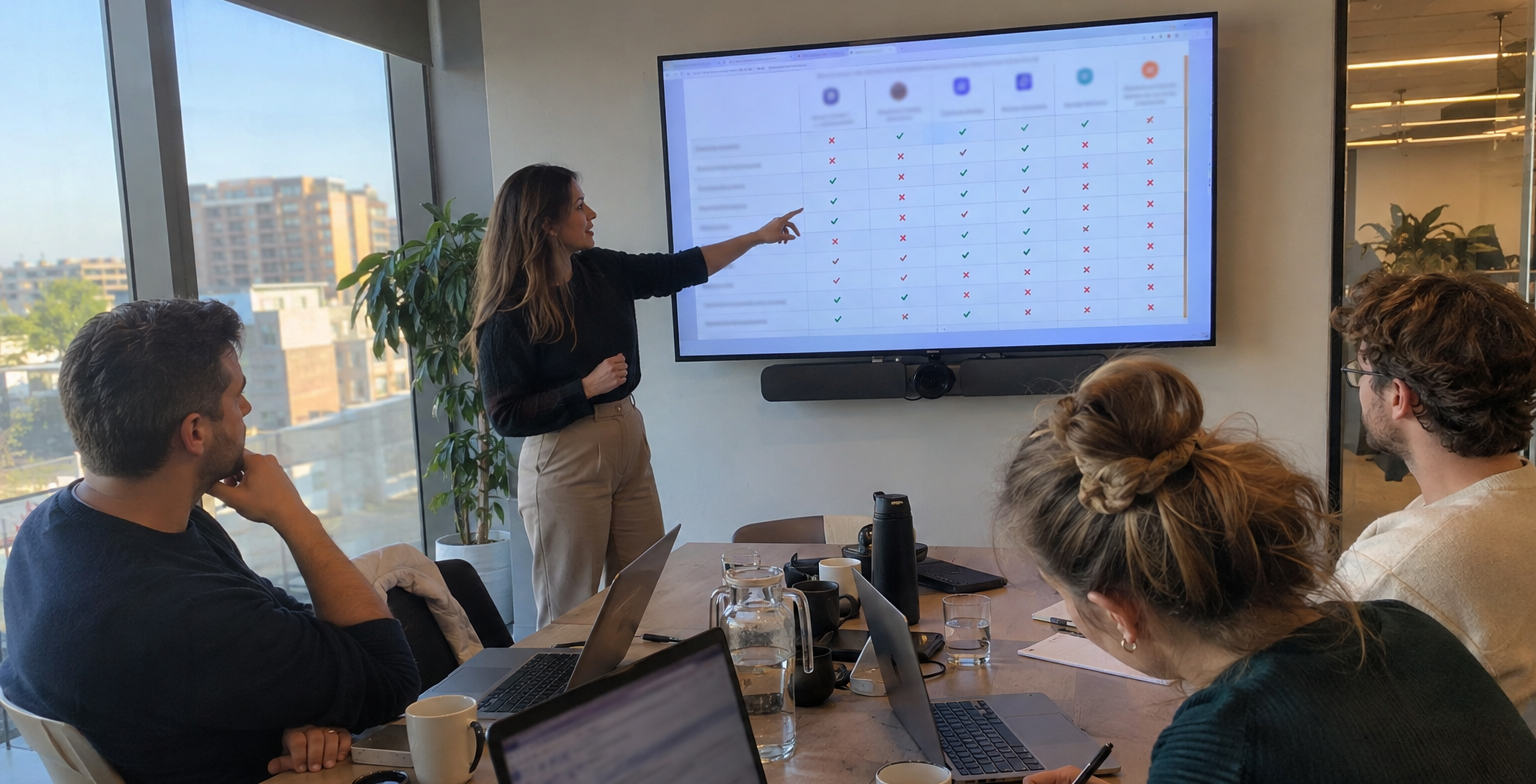
Most teams have no idea how they look inside AI answers. They rank fine on Google, assume that carries over, and never check. It does not carry over. You can find out exactly where you stand in an afternoon with nothing but a spreadsheet and access to the major AI engines. With a baseline in hand, breaking citation share down by buyer persona shows which buyers you win and which you miss.
Step 1: Build a buyer-question prompt set
Do not test vanity prompts like "what is [your brand]." Test the messy, unbranded questions a real buyer types when they do not know you exist yet. Aim for 20 to 30 prompts across the topics you want to win.
Pull them from three places: the questions your sales team hears on calls, the searches in your existing search console data phrased as full questions, and the category comparisons buyers make. A good prompt sounds like a person, not a keyword. For example, "what tools help a Series B SaaS company show up in AI search results" beats "AEO tools."
Group the prompts by topic and by the persona asking. That grouping is what turns a pile of results into a map of where you are strong and weak. A full audit report is organized the same way, and how to read an AEO audit report explains its persona and topic breakdowns section by section.
Step 2: Run each prompt across the engines
Take every prompt and run it, unbranded and in a fresh session, through ChatGPT, Claude, Gemini, and Perplexity. Use a clean session each time so prior context does not bias the answer. For each run, record three things:
- Were you mentioned in the answer at all?
- Were you cited with a source link?
- Which competitors and which domains were named or cited instead?
That third column matters as much as the first two. It tells you which sources the models trust in your space, which is your target list for earned coverage later.
Step 3: Score what you find
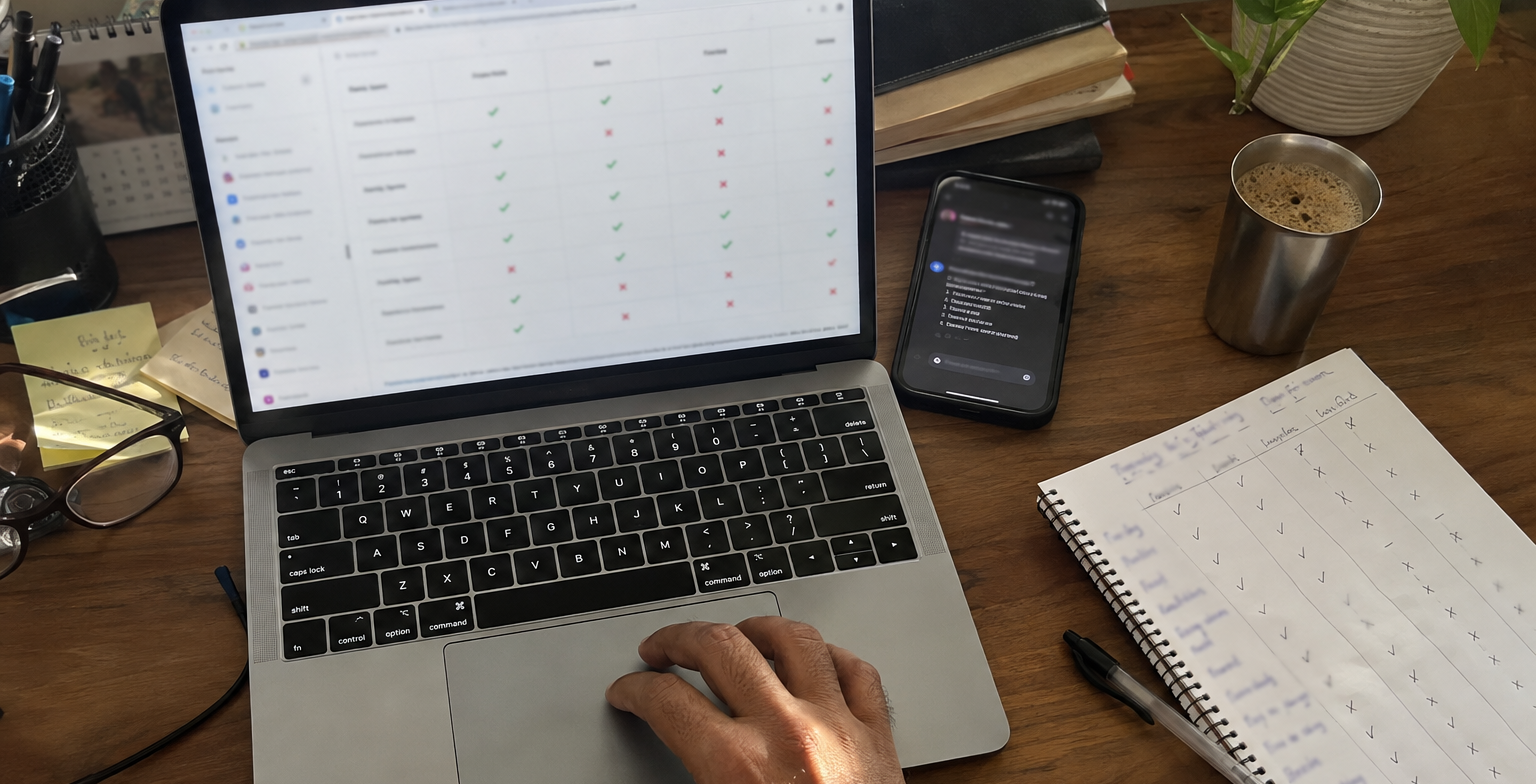
Turn the raw notes into numbers so you can compare topics and track movement over time. A simple scoring frame:
| Signal | What it means | Points |
|---|---|---|
| Cited with a source link | Strongest outcome, you are the answer | 2 |
| Mentioned without a citation | Model knows you, no link earned | 1 |
| Absent | Model does not surface you | 0 |
| Competitor cited, you absent | Active gap to close | Flag it |
Add up points per topic and per persona. Divide by the maximum possible and you have a citation share percentage you can bring to a leadership review. For the deeper version of this metric and how to make it board-ready, see our guide on how to measure your brand's AI citation share across LLMs.
Step 4: Find the gaps that matter
Now read the map. You are looking for three patterns:
- The zero-visibility topic. A whole subject area where you are absent everywhere. This is usually the fastest win because you are starting from nothing and any citation is progress.
- The blind-spot persona. A buyer type whose questions you never answer well. If demand gen directors ask five questions and you appear in none, that persona is a hole in your content.
- The competitor-owns-it prompt. A question where one rival gets cited every time. Study their page. It almost always has a cleaner answer-first structure than yours.
Step 5: Fix the pages, do not just note the gaps
An audit that ends in a spreadsheet is wasted. Turn the top gaps into a short content list. For each gap, either the page does not exist or the page exists but is not structured to be quoted.
If the page is missing, write one built to be cited: a direct answer up top, question-shaped headings, a table, and real FAQs. Our walkthrough on how to get your brand cited by ChatGPT, Claude, and Perplexity covers the exact structure.
If the page exists but is invisible, the problem is usually one of two things. Either AI crawlers cannot read it cleanly, which you can check and address with the free llms.txt generator, or the content buries its answer under three paragraphs of preamble so the model has nothing quotable to lift.
Step 6: Set a cadence
One audit is a snapshot. Visibility moves as models update and competitors publish, so rerun the same prompt set monthly and watch the trend. This is the part teams skip and the part that actually builds a program. If running a 30-prompt sweep by hand every month is not realistic, that continuous measurement and the content engine that acts on it is what the Content Engine and how OnlyAEO works handle for you, and you can see what that covers on the Content Engine page.
Proof that closing these gaps works is documented in the FastTrackr AI case study.
Frequently asked questions
How many prompts do I need for a useful audit?
Twenty to thirty real buyer questions is enough for a first read. Spread them across the topics you want to win and the personas who ask them. Fewer than that and you miss patterns; many more and the afternoon turns into a week without much added signal.
Which AI engines should I test?
At minimum ChatGPT, Claude, Gemini, and Perplexity, since they cover the bulk of buyer research. Test each prompt in a fresh, unbranded session so previous context does not skew the answer, and record mentions and citations separately for each engine.
What is a good citation share to aim for?
There is no universal number because it depends on how competitive your category is. The useful target is relative: know where you start, pick your weakest topic and persona, and aim to move those from zero to consistent citations first. Track the trend, not an absolute.
How often should I rerun the audit?
Monthly is the right cadence for most brands. AI models update and competitors publish, so a quarterly check misses movement you could have acted on. Reuse the exact same prompt set each time so the comparison is clean and the trend is real.