
The SaaS Marketing Leader's Playbook for Measured AI Visibility
Operational playbook for SaaS marketing leaders to build and run a measured AI visibility program. Step-by-step process from first audit to ongoing optimization.

Key Highlights
- A measured AI visibility playbook for SaaS gives your team repeatable monthly processes for tracking citation rates, identifying content gaps, and proving ROI to stakeholders
- The playbook follows a four-phase cycle: audit (measure current state), analyze (identify opportunities), act (create targeted content), and assess (re-measure to prove impact)
- SaaS teams that run this cycle monthly see 2-4x faster citation growth than teams that measure quarterly or ad hoc
- The playbook works regardless of team size because the measurement and analysis steps can be automated or outsourced while strategic decisions stay internal
Every SaaS marketing team needs an AI visibility playbook
Not a strategy document. Not a quarterly presentation. A playbook. Something your team picks up on the first Monday of every month and runs through from start to finish.
We have built these playbooks for SaaS brands from Series A to publicly traded. The specifics vary, but the operating rhythm is remarkably consistent. Here is the version that works across stages, team sizes, and categories.
The four-phase monthly cycle
Phase 1: Audit (Days 1-3)
Run your standardized prompt set across all four AI platforms. If you are using Gumshoe, this is largely automated. If you are doing it manually, allocate two full days.
What you are measuring:
Overall citation rate vs. last month. Per-platform citation rates (ChatGPT, Claude, Gemini, DeepSeek). Competitive leaderboard changes. New citations gained (queries where you now appear but did not last month). Citations lost (queries where you appeared last month but do not now).
Key output: A one-page scorecard with your headline numbers and competitive positioning.
Phase 2: Analyze (Days 4-7)
Turn measurement into insight. This is where most teams skip straight to content creation and lose the strategic advantage of measurement.
Gap analysis: Which queries have zero brand coverage but high buyer value? Rank them by estimated buyer intent and competitive difficulty.
Displacement analysis: Where are competitors weakly cited? A competitor mentioned as "also consider" is easier to displace than one positioned as "the leading solution."
Content effectiveness review: Which articles you published last month are now driving citations? Which are not? Understanding what works helps you create more effective content.
Key output: A prioritized list of 15-25 content opportunities ranked by expected citation impact.
Phase 3: Act (Days 8-25)
Execute against your prioritized content list. This is where most of the monthly effort goes.
Content production guidelines for citation effectiveness:
| Content Type | Citation Lift | When to Use |
|---|---|---|
| Comprehensive category guide | High | Target broad category queries |
| Head-to-head comparison | Very high | Target "[Brand] vs [Competitor]" queries |
| Problem-solution article | High | Target buyer pain-point queries |
| Industry-specific guide | Medium-high | Target vertical-specific queries |
| Technical deep-dive | Medium | Target technical decision-maker queries |
Volume targets by team size:
Solo marketer: 8-12 pieces per month. Small team (2-3): 20-30 pieces per month. Growth team (4-6): 40-60 pieces per month. With AEO partner: 250-500 pieces per month.
Phase 4: Assess (Days 26-30)
Quick pre-audit to check early signals from the content published this month. This is not a full measurement cycle (that happens next month), but a directional check.
Are the articles you published indexing? Can you spot any early citations in informal AI queries? Are there any obvious issues with content quality or formatting?
Key output: Notes for the next month's audit cycle, including any content that needs revision and any early wins worth highlighting to stakeholders.
Running the playbook with a small team
You do not need a dedicated AEO team to run this playbook. Here is how it works with limited resources:
Automate measurement. Tools like Gumshoe automate Phase 1 almost entirely. Your investment is reviewing the output, not generating it.
Outsource production, own strategy. Many SaaS teams outsource content production (Phase 3) to AEO specialists while keeping the analysis and strategic decisions (Phase 2) internal. This is usually the right division of labor because your team understands your market better than any external partner, but the external partner can produce content at the volume needed for citation growth.
Template the reporting. Build a monthly report template once and populate it with updated data each cycle. The template should include: headline citation rate, month-over-month change, top 3 wins, top 3 gaps being addressed, and a 30-day content plan.
Stakeholder communication rhythm
Weekly to your marketing team: Quick Slack update on content published, any early citation signals, and priorities for the week.
Monthly to your VP/CMO: The one-page scorecard from Phase 1 plus the prioritized content plan from Phase 2. Keep it to one page. Citation rate trend, competitive position, and next month's focus.
Quarterly to your executive team: Three-month trend analysis showing citation rate growth, competitive displacement wins, and any downstream business signals (branded search, referral traffic). Lead with the competitive story: "We have moved from #15 to #8 on the AI visibility leaderboard in our category."
Adapting the playbook as you scale
The playbook structure stays the same as your program matures. What changes is the sophistication of each phase.
Month 1-3: You are building the muscle. Measurement cycles feel slow. Content targets feel ambitious. This is normal. Focus on establishing the rhythm.
Month 4-6: You have baseline data and can start identifying patterns. Which content types drive the most citations? Which platforms respond fastest to new content? Use these insights to refine your content mix.
Month 7-12: The playbook becomes a competitive weapon. You have historical trend data, a proven content formula, and clear ROI evidence. This is when you can advocate for budget increases or expanded team resources with confidence.
The SaaS brands that dominate AI visibility in their category did not get there with one brilliant campaign. They got there by running a disciplined monthly playbook that compounds over time.
Get help building your AI visibility playbook
OnlyAEO designs and executes measured AI visibility programs for SaaS brands. We handle the measurement, the content, and the optimization so your team can focus on strategy.
Build Your PlaybookFrequently Asked Questions
How often should SaaS teams run their AI visibility playbook?+
Can small SaaS teams run a measured AI visibility program?+
What is the expected timeline for results from a measured AI visibility playbook?+

OnlyAEO
Expert insights on Answer Engine Optimization and AI visibility strategy.
Related Articles

Ongoing AEO Optimization for SaaS: The Compounding Effect Nobody Talks About
Ongoing AEO Optimization for SaaS: The Compounding Effect Nobody Talks About. Learn how OnlyAEO helps brands build measurable AI visibility across ChatGPT, Claude, Gemini, and DeepSeek.
Read article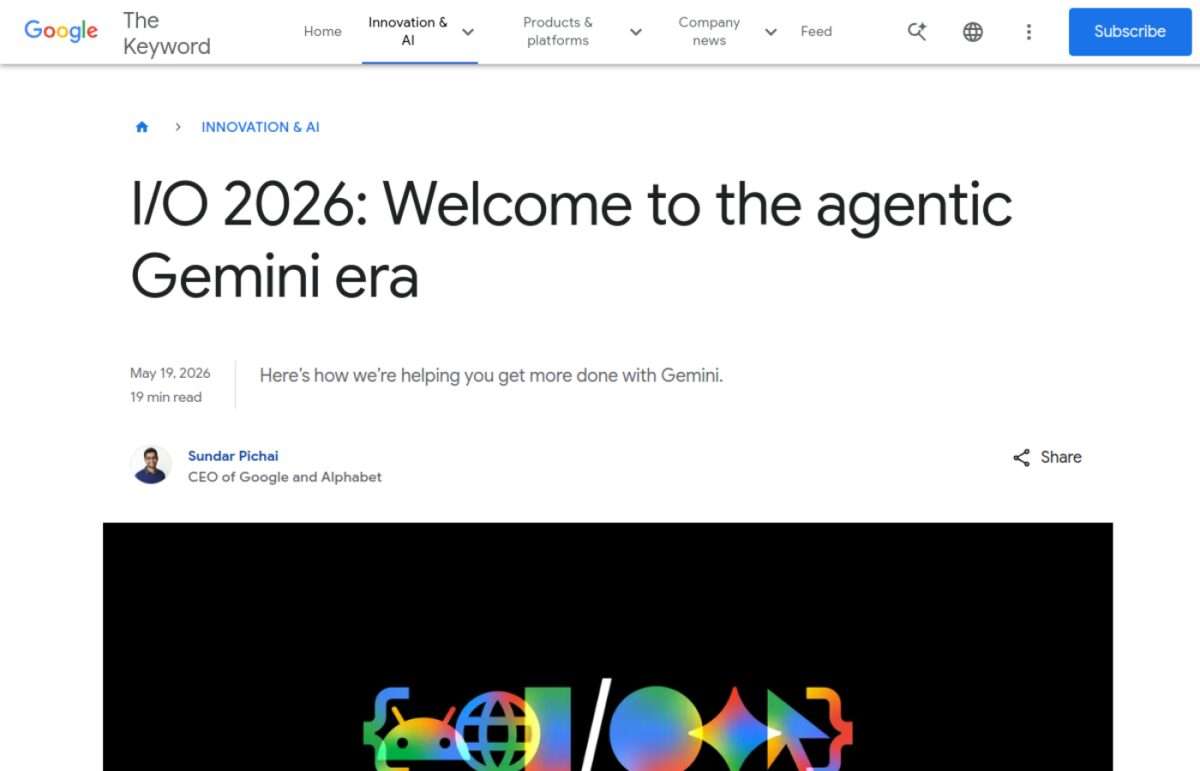
Search Is Changing. A CMO's 2026 Field Guide to AEO.
Sundar Pichai called it the deepest change in Search's history. Here's what every CMO needs to know about AEO and GEO, sourced from Google I/O 2026, OpenAI, Anthropic, Perplexity, HubSpot, Ahrefs, Semrush, and 18 practitioners.
Read article
Cross-Platform AEO Coverage: How OnlyAEO Optimizes for Every Major Model
Why single-model AEO strategies underperform, how cross-platform coverage actually works across ChatGPT, Claude, Gemini and DeepSeek, and OnlyAEO's practitioner framework for measuring and improving model-level citation rates.
Read article